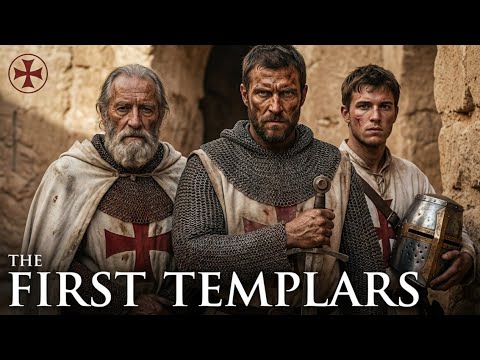
Explorez «controlled male chastity» à travers cette vidéo publiée sur YouTube
Un développement de Dark History Secrets autour de « controlled male chastity »
Dark History Secrets a partagé cette vidéo sur YouTube
concernant « controlled male chastity »:
Cette vidéo était active en termes de visionnage à la date où nous l’avons remarquée. Le compteur de Likes indiquait: 1.
La durée (01:22:32s), le titre (The First Templar: The Secret Oath That Forced a Pope to Kneel l History For Sleep) et les informations de l’auteur sont des détails importants à considérer, tout comme la description :«  The Man Who Built a Secret Empire From Zero: Hugues de Payens and the Birth of the Templars
Did the Knights Templar start as a band of destitute knights who shared one horse, only to become the wealthiest, most feared corporation in the medieval world? Absolutely. This is the unbelievable true story of Hugues de Payens, the first Grand Master, and his ruthless, calculated political genius that transformed a vow of absolute poverty into an untouchable global financial network.
 THE NARRATIVE ARC
We trace the narrative through three intense acts: Act I: Setup and Inciting Incident, where Hugues secures the derelict King’s Stables and manipulates the ‘Whispers of the Relic’ to survive. Act II: Rising Action and Conflict, where the ruthless political alliance with André de Montbard and the battlefield validation at the Jordan Massacre sets the stage for the Midpoint Reversal—the creation of the secret European Treasury. Act III: Climax and Resolution, detailing the stunning defiance of King Baldwin II, the brutal reckoning at Ascalon, and the final, successful power-play for the Golden Bull (Omne Datum Optimum), which secured the Order’s legal immortality.
Don’t miss a minute of this gritty, cinematic deep dive into hidden medieval history!
If you love dark history, epic medieval drama, and stories of unimaginable political betrayal, hit that SUBSCRIBE button and ring the notification bell! Share this video with anyone who needs to know the true, shocking origins of the Knights Templar!
00:00:00 Introduction: The Shock and Awe Hook
00:04:30 The Vow of Destitution and the King’s Stables
00:13:00 The Patron’s Gambit: Bernard, André, and the Secret Oath
00:23:45 The Whispers of the Relic: Surviving Internal Sabotage
00:34:30 Massacre at the Jordan: Proving Their Military Worth
00:46:15 The Shadow of Saint Bernard and the Pope’s Seal
01:00:45 Midpoint Reversal: Birth of the European Treasury
01:10:00 The Betrayal of the Royal Seal: Defying the King
01:19:15 The Siege of Ascalon and the Reckoning
If this story helped you relax or fall asleep  , don’t forget to like
  , leave a comment
  , and subscribe
  for more soothing journeys through time.
more video: https://www.youtube.com/@darhist?sub_confirmation=1
New calming history stories every week — your peaceful nights start here! 

This video was created through a combination of human creativity, historical research, and narrative voiceover development. While AI tools were used as supportive assistance in organizing and enhancing storytelling flow, all content was carefully guided, written, curated, and narrated by a human creator to ensure originality, accuracy, and a unique viewing experience. The use of AI was strictly limited to non-autonomous aid, similar to spelling tools or image editors, and does not replace human authorship or creative intent.
#KnightsTemplar #Crusades #TemplarSecrets #MedievalHistory #HiddenHistory #HistoryDocumentary #MedievalMystery
#history #ancienthistory #historyforsleep ».
YouTube est un excellent espace pour découvrir des vidéos touchant une grande variété de sujets, allant de la culture à des réflexions personnelles, tout en assurant que chaque utilisateur puisse interagir dans un cadre respectueux et sûr.
FAQ à propos de la Chasteté.
La chasteté est-elle restreinte aux personnes religieuses ? La chasteté n’est pas exclusive aux personnes religieuses; elle peut aussi concerner des laïcs. Quelle est la différence entre la chasteté et l’abstinence ? L’abstinence concerne spécifiquement l’engagement de ne pas avoir de relations sexuelles. La chasteté inclut parfois l’utilisation d’un accessoire comme une ceinture ou une cage, et suit une méthode de progrès comparable à celle d’un entraînement sportif. Quelle est la pratique de la chasteté chez les couples mariés ? La chasteté dans le mariage est souvent une démarche commune ; si l’un des partenaires adopte une pratique de chasteté, cela est généralement abordé avec le conjoint. Pourquoi la chasteté est-elle une vertu importante pour l’Église ? L’Église attache une grande importance à la chasteté car elle est perçue comme essentielle pour une vie chrétienne authentique. En quoi la pratique de la chasteté peut-elle enrichir l’épanouissement personnel ? La chasteté favorise l’épanouissement personnel en offrant un meilleur contrôle de soi, une clarté mentale accrue et une paix intérieure.
Mettre en pratique la chasteté chaque jour.
Adopter la chasteté peut se faire par diverses stratégies pour les hommes. Commencer par une réflexion intérieure pour comprendre ses motivations et valeurs est essentiel. Il peut être avantageux de se tenir éloigné des situations et contenus qui pourraient éveiller des désirs incontrôlés. Trouver un mentor ou rejoindre un groupe de soutien avec des convictions similaires peut aider à maintenir le cap. La chasteté peut être difficile à vivre dans une société où la sexualité est omniprésente. Les défis incluent la pression sociale et les tentations incessantes. Pour surmonter ces obstacles, il est crucial de maintenir une discipline personnelle rigoureuse. Il est fondamental de ne pas se décourager après un échec, mais de repartir avec une motivation renforcée. La chasteté n’est pas une perfection à atteindre, mais un parcours qui demande patience et persévérance. En conclusion, la chasteté est une vertu puissante qui, lorsqu’elle est intégrée dans la vie d’un homme, peut conduire à une plus grande liberté, une meilleure maîtrise de soi, et un épanouissement spirituel profond. Dans un monde où la sexualité est souvent privilégiée au détriment de la spiritualité, la chasteté, bien qu’elle puisse paraître contraignante, permet d’atteindre une vie plus authentique, alignée avec ses valeurs et sa foi.
S’intéresser aux origines historiques et culturelles de la chasteté.
La chasteté a des racines profondes dans de nombreuses traditions religieuses et culturelles. En christianisme, la chasteté est souvent liée au vœu de continence fait par les prêtres et les religieux. L’islam, de même que les Églises catholique et orthodoxe, valorise la chasteté comme une vertu importante, aussi bien pour les religieux que pour les laïcs, particulièrement avant le mariage. Dans le passé antique, la chasteté était respectée comme une méthode pour protéger l’intégrité personnelle et la pureté morale. La chasteté, donc, transcende les âges et les cultures, restant une vertu vénérée et respectée.
L’impact de la chasteté sur le bien-être personnel et moral est marqué. Étudier comment la chasteté influence le bien-être personnel et moral.
L’effet de la chasteté sur le bien-être personnel est profond avec une pratique consciente. La chasteté améliore la maîtrise de soi, la clarté mentale, et la paix intérieure en respectant les convictions morales. Cultiver la chasteté permet à l’homme d’avoir une relation plus harmonieuse avec son corps et ses désirs. La liberté obtenue par la chasteté vient de la libération des pulsions et des pressions sociales associées à la sexualité. En cultivant la chasteté, on développe un sens de pureté morale qui renforce la dignité et l’estime de soi. Les bienfaits psychologiques liés à la chasteté sont particulièrement évidents. La pratique de la chasteté conduit à une confiance en soi accrue et à une meilleure gestion des défis.
La chasteté est souvent perçue comme une composante essentielle de la spiritualité.
Dans de nombreuses religions, la chasteté est liée à la dimension spirituelle. Dans le christianisme et d’autres religions, la chasteté est une manière de se rapprocher de Dieu. Maîtriser ses désirs sexuels facilite une plus grande concentration sur le bien-être intérieur. La chasteté est ainsi vue comme une offrande de soi et un acte de respect envers Dieu. La chasteté est perçue comme un choix pour élever l’âme et non comme une simple privation. Les différentes traditions religieuses offrent des points de vue variés sur la chasteté. Dans le catholicisme, la chasteté est une vertu essentielle que les prêtres sont appelés à observer. L’islam valorise la chasteté en établissant des règles rigoureuses pour réguler la sexualité. Dans l’hindouisme et le bouddhisme, la chasteté est un moyen pour les ascètes d’atteindre l’illumination. Les croyants de diverses religions sont unis dans une quête commune de chasteté.
La chasteté : Une vertu redécouverte pour l’homme contemporain.
Dans le monde d’aujourd’hui, la chasteté est une qualité souvent taboue. La chasteté, lorsqu’elle est intégrée dans la vie quotidienne, peut offrir une paix intérieure accrue, renforcer les relations et enrichir la connexion spirituelle. Dans les temps anciens, la chasteté était plus souvent reconnue et discutée. La thématique de la chasteté est largement couvertedans cet article ici www.chastete.fr. L’article propose une analyse de la chasteté sous plusieurs perspectives, fournissant aux hommes des clés pour saisir et pratiquer cette vertu dans leur vie de tous les jours.
Étudier comment la pratique de la chasteté affecte les relations avec les autres et les liens familiaux.
La pratique de la chasteté influence aussi favorablement les relations avec autrui. L’utilisation d’une cage de chasteté permet à un homme de restaurer ses talents de séducteur et de changer son comportement avec ses partenaires. La réduction de la fréquence d’utilisation rend les capacités physiques et sexuelles plus puissantes pendant l’acte. Il est envisageable de suivre la chasteté en toute discrétion, sans divulguer ce choix à ses partenaires. Dans un cadre marital, la chasteté peut renforcer les liens entre les époux en favorisant un amour plus authentique, éloigné du plaisir charnel.
Définir la chasteté dans le contexte d’aujourd’hui. Analyser la chasteté dans le contexte de la vie moderne.
Au cœur de la chasteté se trouve le contrôle de soi en matière de désirs sexuels. La chasteté va au-delà de l’abstinence, englobant un contrôle conscient des désirs sexuels dans un cadre moral. À l’ère moderne, la chasteté est plus qu’une suppression des désirs; elle vise à les orienter vers des objectifs plus élevés comme le respect de soi et des autres. Dans le monde moderne, être chaste ne veut pas dire se priver du plaisir, mais plutôt vivre sa sexualité en faisant des choix conscients.
Pour voir cette vidéo sur YouTube, suivez ce lien :
la source: Cliquer ici
#Templar #Secret #Oath #Forced #Pope #Kneel #History #Sleep
Retranscription des paroles de la vidéo: They had traded the promise of eternal glory for
a begging bull and an old horse they were forced to share. Nine broke knights sworn to poverty who
would in a few decades possess more gold than all the crowned heads of Europe combined. How does a
man build an empire of unimaginable wealth on a vow of absolute destitution? The heat of the
Jerusalem summer of 1119 was not a dry clean furnace. It was a smothering feted blanket of
filth and human misery clinging to the sweaty walls of the holy city. Below the golden dome
of the church of the holy supplr where the very promise of Christianity lay enshrined Ugans knelt.
He wasn’t praying. His spine was poker straight, and his eyes, usually the color of
chipped slate, were squinted against the fierce sun. He felt the familiar low
burning throb of his war scars, a deep, ugly slash across his shoulder from the siege of
Antioch, and a constant ache in his right thigh, a painful souvenir of a nasty skirmish near Ty.
These scars weren’t mere memories. They were the ledger of his failures. A minor French nobleman, a
crusader who had failed to carve out a territory, Ugans was now little more than a skilled swordsman
without a feudal lord, a broke mercenary in a conquered land already drowning in mercenaries.
Beside him knelt eight other men. They were a ragtag collection of European noble cast rejects,
all equally thwarted in their ambitions. Knights from Flanders, Provence, and Champagne,
each possessing a fighting skill that vastly outstripped their fortune. Among them, Godfrey de
Staint Omare, a Flemish brute with a gentle oxlike face, shifted his weight uncomfortably. They were
waiting for an audience with King Baldwin II, and the wait was humiliatingly long. « Look at them, »
whispered Gondmar, a man from Provence, whose once fine ciat was now patched with the rough cloth
of a pilgrim. « The priests of the Sephiler, fat, scented, counting their goldplated cups, and us
who put them here, we wait like bums. » Ug didn’t respond, but the sentiment was a stinging insult
to his pride. The first crusade had succeeded, establishing the fragile, bloody kingdom of
Jerusalem, but its success immediately birthed a lethal problem. The pilgrimage routes from the
coast to the holy city were choked with bandits, rogue sarissers, and greedy Christian highwaymen.
Tens of thousands of pious pilgrims were being robbed, assaulted, and slaughtered every year. The
established military orders, like the hospitalers, were focused on caring for the sick and wounded,
not policing the treacherous roads. King Baldwin II’s small force was spread thin, consumed by
defending the kingdom’s borders. Nobody was protecting the path to salvation. This was the
critical vacuum Ug had spotted. It was a space that required more than courage. It required an
organizational genius that bordered on fanaticism. When the massive wooden doors finally creaked
open, they were ushered into a small, suffocating chamber. King Baldwin II was thin and anxious,
seated on a simple stool, listening to a frantic report from one of his officers about a caravan
massacre near Cesaria. He waved the knights forward with an impatient hand. your grace. We are
nine men, nine who have fought for your kingdom and who see what happens on the roads. The blood
of the devout soaks the earth, and the path to the supplr is a slaughterhouse. It is a disgrace, and
it is a wound to all Christendom that will fester into open rebellion. Baldwin sighed, rubbing his
temples. And you propose to solve this with nine swords? I have 900 men and still I can’t seal
the path from Jaffa. What exactly is your plan, Ug? You’re an honorable man, but you’re a man
without land, without title, and without cash. This was the brutal truth that Ug immediately
turned to his advantage, using the king’s contempt as the foundation for his outrageous gamble. He
locked eyes with Baldwin, his voice dropping to a harsh absolute conviction. We do not ask for land.
We do not ask for money. We ask for nothing but the solemn promise itself. We will take the full
monastic oath of poverty, chastity, and obedience, but to a singular brutal purpose, the armed
protection of the pilgrims on the king’s highways. The statement hung heavy in the air, a shocking
contradiction. To take the solemn vows of a secluded monk, and yet carry a sword for the
purpose of systematic, lethal violence was utterly unprecedented. The established church would
certainly condemn it. It was a brutal, pragmatic merger of the cross and the blade. Baldwin stared,
momentarily stunned. He saw the fire in Ug’s eyes, the stark, hungry dedication shared by the eight
men behind him. They were offering to perform a vital, dirty, and expensive task for free. A
monastic order of fighting men, Baldwin muttered, a flicker of dark amusement crossing his face.
« You will have no lands to payans, no holdings. I can give you but an oath and the disdain of the
priests. The oath is all we require, your grace, Ug, a ghost of a smile touching his lips. He
wasn’t asking for a handout. He was demanding a political and religious charter. Baldwin ran
a hand over his tired face. Fine, I permit this order. I can grant you sanctuary, meager though
it is. I can house you near the king’s own palace on the temple mount. But understand this dep.
You will be called the poor fellow soldiers of Christ and the temple of Solomon. You will
have the south wing of my stables. It is falling apart and overrun with rats. You will
have no revenue. You will be nine men sharing one ragged horse between two fighting against an
ocean of enemies. You will fail. We will not fail, Ug said simply, accepting the king’s insult as
his order’s first most crucial asset. a place in the king’s own backyard, a foothold on the
holy rock of the temple mount itself. He bowed, a masterfully executed gesture of humility that
completely masked the triumph surging through him. The king saw nine desperate poor knights. Ug
saw the first nine bricks of an empire. As they left the stifling chamber, Ug turned to his men.
His eyes were cold, calculating. King Baldwin has given us an order and a hvel. The Pope will give
us legitimacy. St. Bernard will give us a rule. But we, he lowered his voice, we will take
what they cannot give. The absolute, total, unyielding power of trust. Now, let’s go check out
the stable. The men followed him toward the temple mount, leaving the opulent, suffocating heat of
the sephiler behind. There were nine impoverished men walking toward a derelic barn. But in Ug’s
mind, the cornerstone of the most formidable secret society the world had ever known had just
been laid. He had the scarcity, the desperation, and the laser-like focus. The road to power began
with a vow of nothing. He had to keep them poor, keep them dedicated, and above all, keep their
secret. that their true mission was not just protecting the road, but establishing a network
that would ultimately eclipse the very kings they served. The grit of Jerusalem’s dust stuck to his
boots, a perfect symbol for the gritty, hard one future he saw stretching ahead. The southern wing
of the royal stables, the temple of Solomon that King Baldwin II had so carelessly bestowed upon
them, was not merely neglected. It was actively hostile. It was a vast crumbling stone structure,
the ancient remnants of Herod’s glorious platform, now used as a glorified manure pit and a storage
facility for broken siege equipment. The odor of stale urine, horse sweat, and decay was a physical
presence, thick and suffocating. This was their headquarters, their monastery, their castle, a
dilapidated barn. given over to the poor fellow soldiers of Christ. Hug’s deayens stood in the
cavernous space, dust moes dancing in the shafts of light that pierced the broken roof tiles. His
eight fellow knights stood behind him, their faces a mixture of disappointment and grim resolution.
The king had given them no furniture, no stores, and no money. Their entire initial wealth
consisted of the nine suits of armor on their backs, the few coins sewn into their tunics, and
the single aging gray horse they were now forced to share between pairs. Look around you brothers.
Hug’s voice echoed in the desolate space, cutting through the silence. The king intends
for us to fail. The hospitalers laugh in their silklined infirmaries. The patriarch of Jerusalem
sees us as nine more hungry mouths. This is not a slight but an opportunity. Godfrey de Santoare,
the largest of the group, was already rolling up his sleeves. An opportunity to clean a very large
latrine. Huges, where do we even sleep? The floor is slick with years of filth. We sleep on the
floor. Where do we eat? We beg, Huges commanded, his eyes gleaming with a fierce, almost aesthetic
zeal. He understood the tactical value of poverty. If they were seen as a conventional military
order, they would be judged by their resources and their size, and they would be crushed. But if they
were seen as something other, something radically spiritual and utterly destitute, they would be
judged by their piety. It was a camouflage of virtue. Their first year was a grueling ordeal of
deprivation. They took shifts guarding the walls and patrolling the most dangerous stretches of the
Jerusalem Jaffa road, a stretch of duty that saw them constantly outnumbered, yet miraculously
surviving. When they returned, they subsisted entirely on charity. Huges instituted a brutal
Spartan routine. Long hours of prayer followed by rigorous combat training, all while wearing
their heavy unwashed armor. Food was scarce. They became gaunt, their faces hollowed out, their eyes
burning with feverish intensity. Huges was not exempt. He was the most auster among them, selling
a finely crafted silver crucifix, the last remnant of his minor aristocratic lineage, to buy feed
for their single shared horse. He enforced the now famous yet deeply pragmatic rule. Since they
had so few horses, they would ride two to a beast, a practical measure of economy that quickly became
the enduring powerful symbol of the Templars on their seal. The image of two knights sharing one
charger. One night, Gandmar, the provenal knight, snapped. They were huddled in the cold stable,
shivering, their stomachs empty. This is madness, Huges. We are knights of noble birth. We could
be serving any count in the crusader states for a rich wage. Instead, we are begging for stale
bread from pilgrims we are supposed to protect. We are dying of shame and hunger. Gandmar spat the
words out. Hug stepped towards him, his movement precise and terrifyingly calm. He didn’t raise
his voice, which only made his response colder, sharper. Shame. Shame is retreating from a
fight. Hunger is discipline. When we die, brother, we will not die in comfort, cushioned
by the wealth of a frivolous lord. We will die fighting the saras, stripped bare, having taken
nothing from this world. That is our power, Gandamar. Every man who sees us, filthy, hungry,
and defiant, knows we have no self-interest. They know we fight only for the cross. That belief
is worth a thousand armies. That belief will be our first treasury. Gandmar fell silent, defeated
not by force, but by the undeniable intoxicating power of Hug’s ideology. The order was not
meant to make the knights comfortable. It was meant to make them indispensable. This period of
forced absolute poverty served a dual purpose in Hug’s long-term plan. It forged an unbreakable
internal loyalty, creating a cadre of men who had suffered together and believed themselves
chosen for a divine purpose and it created a powerful public narrative. News began to spread
through the crusader states and back to Europe. The poor fellow soldiers, nine nights living in
abject poverty in the king’s stables, dedicated solely to the dangerous work of protecting
pilgrims. This narrative of self-sacrifice was the perfect political weapon. Huges knew
this fragile structure needed a powerful external patron to survive its second year. The
hospitalers were already moving against them, lobbying the local bishops to declare their
unorthodox fusion of monasticism and military life heretical. « We are too weak for Jerusalem, » Huges
announced to his men one freezing morning. « Our fame must precede us. We need a voice in Europe, a
powerful sword in the heart of Christrysendom that can crush our critics before they even speak. »
He chose Andre de Mombar, a formidable wealthy knight from Burgundy as his ambassador and future
recruit. But the real target was Andre’s relative, Bernard of Clairvo. Bernard was not just any
monk. He was the spiritual conscience of Europe, the most powerful man in the church who wasn’t
the Pope. Huges knew that if Bernard wrote their rule and spoke for them, their legitimacy would
be ironclad, their reputation absolute. Huges prepared for the journey back to Europe,
a monumental undertaking that required him to leave the fledgling order in the hands of
Godfrey Desto. As he strapped his saddle bag, containing little more than his worn breviary and
the patent from King Baldwin, he looked one last time at the squalid sacred space they had endured.
The filth had been cleaned, the walls were bare. The temple of Solomon was a ruin, but Huges had
imposed a terrifying singular discipline upon it. When I return, Huges promised Godfrey, his voice
barely audible. We will have more than a name. We will have a destiny. Guard the roads, brother.
And remember, every day you go hungry, every hour you suffer is a prayer that Europe will pay for.
The long gruelling ride from the parched chaos of Jerusalem to the damp green order of Champagne
France was its own kind of pilgrimage. Hughes Deeens weathered and lean arrived in the county
of Champagne in 1127 not as a triumphant crusader but as a beggar dressed in armor. He carried the
king of Jerusalem’s official yet meager sanction and an unofficial yet monumental ambition. He
first sought out his cousin Bernard of Clairvo, the abbot of the Cistersians. The Clairvo Abbey
was a vision of severe unyielding purity, stone, water, and silence. Bernard had made his
name by rejecting the gilded excesses of the older Benedictine houses. His rule was harsh, his
sermons were fire, and his moral authority spanned every court in Europe. Hughes knew that Bernard’s
endorsement was worth more than a thousand lances. It was the absolute seal of divine approval. He
was received in a cold, sparsely furnished room. Bernard, a man whose fierce intellect seemed
to consume his physical body, was frail, yet his gaze held a hypnotic, terrifying clarity.
He looked at Hughes, not with familial affection, but with the cold, analytical judgment of a
spiritual auditor. Cousin, Bernard’s voice was ready, but carried the weight of destiny. I
hear your story. Nine men sleeping in the king’s manure pit, sharing one horse, risking death daily
to protect the weak. A paradox, a military order that accepts the vows of a contemplative monk.
It is either an act of singular divine grace, or it is heresy disguised as piety. Hughes had
rehearsed this moment for 2 years. He knelt, not out of custom, but out of calculated necessity.
We are simple soldiers, Bernard. We saw the chaos, the failure of the princes, and we chose to
surrender all earthly attachment to end it. We are poor that Christ may be rich in his followers. We
seek to redeem our violent trade through absolute self-sacrifice. He placed the worn parchment of
King Baldwin’s charter on the table, along with a crude but heartbreaking sketch of the two knights
sharing a horse. Hughes didn’t speak of strategy or finance. He spoke of the pilgrims bleeding
feet, of the shame of Christryendom, and of the purity of their destitution. He sold Bernard not
on a fighting force, but on a divine metaphor. Bernard sat in silence, absorbing the narrative.
He was the architect of faith. Hughes was the architect of power. For Bernard, this new order
was the perfect tool to reform the corrupted nobility, a way to channel the aristocratic
urge for violence into selfless, holy purpose. The vision is pure, Bernard finally conceded,
a dangerous enthusiasm lighting his eyes. But a body without a soul is a corpse. You need a rule,
Hughes. A Latin rule, strict, unwavering, and holy cisters to protect your spiritual integrity.
I will write it. I will write to the Pope and the cardinals. I will call a council, but you must
swear to uphold the austerity of the rule, and to forever remain outside the politics of the world.
Hughes knew that this was the price of legitimacy, a commitment to spiritual aestheticism that would
ultimately clash with his secular vision. He met the abbott’s gaze with flawless conviction. We
swear, cousin, our obedience will be absolute. He knew that an oath made to a man near
death was merely a foundation, not a cage. With Bernard’s powerful endorsement secured,
Hughes turned immediately to his second far more pragmatic target, Andre Deondborg. Andre was a
powerful landowner and a celebrated battlehardened knight from Burgundy. He was Bernard’s uncle,
yet he had no interest in spiritual purity. Andre was driven by legacy, power, and the shrewd
acquisition of influence. Hughes met Andre not in a monastery but in a noisy tavern outside Djon
amidst the clamor of mercenaries and merchants. The abbott speaks highly of your holiness Hughes.
Andre remarked swirling a tankered of wine, his eyes cynical and assessing. But I know you.
You are a mercenary of the highest skill, one who failed to claim a castle and has instead claimed
a religious charter. You didn’t return from the east for a sermon to pay. You returned for power.
Hughes smiled. A rare chilling expression that acknowledged the truth. Power requires resources,
Andre. And resources are what Bernard’s rule will grant us. Do you know what a papal order means?
It means we will be taxexempt. It means we will answer to no king, no count, and no local bishop.
We will operate outside the secular system. He leaned in, his voice low and intense. The king
of Jerusalem gives us the temple mount. Bernard gives us the faith of Europe. But that faith
will translate into donations, land, coin, men, untaxed, unaccounted for, and freely mobilized
across every border. Andre, we are building not a castle but an independent nation of capital
with Jerusalem as its untouchable head. Andre De Manbour’s eyes, cold and calculating, finally
lit up with interest. This was the language he understood, the language of strategy and absolute
control. I am an old dog, Hughes. I have no patience for prayer and sharing a horse, Andre
said, his large hand resting on the hilt of his sword. I will bring my wealth and my formidable
reputation to your order. I will be your second in command and your future grandmaster, but only on
one condition. Hughes waited, the air thick with tension. This was the moment where the spiritual
promise of the Templars would be irrevocably corrupted, or as Hughes saw it, functionally
completed. « You promised Bernard a pure monastic life, » Andre continued, lowering his voice until
it was a harsh rasp. « I demand the opposite. You must swear to me here now without any priest
as witness that you will use Bernard’s piety as a cloak that you will prioritize the acquisition
and defense of the order’s financial empire over any local king or papal demand that when the time
comes we will choose the gold over the glory. You must swear that the order will become rich. Hughes
did not hesitate. The king of Jerusalem gave him his name. Bernard gave him his soul’s covering.
Andre de Manard was offering him his ultimate engine. I swear it, Hughes said. Sealing the
pact with a grip that bruised Andre’s hand. The piety is the key to the vault, Andre. And once
we are inside, the rule is only a suggestion. Andre De Manbboard became the 10th founding member
of the Templar Order. He was the dark soul Hughes had needed, the man who would ensure that the
order, once armed with Bernard’s pious rule, would ruthlessly pursue Hugh’s grand secular goal. With
Bernard committed to securing their legitimacy at the Council of Troy and Andre committed to
securing their internal power, Hughes began his European tour, leaving behind him a trail
of strategically placed influence. The Templars were no longer nine desperate men. They were an
idea blessed by a saint and funded by a future financial titan held together by two contradictory
yet equally powerful secret oaths. Hug Deans was gone sailing toward the great council of Troy and
the political maneuvering that would make or break the order. In his absence, the remaining eight
knights in Jerusalem, the poor fellow soldiers, found themselves facing a coordinated internal
threat far more dangerous than any sar patrol. Envy. The established orders, particularly the
powerful, well-funded hospitalers watched the public adoration Hug had cultivated with growing
resentment. The narrative of the nine starving, self-sacrificing knights living on the actual
ground where Christ had walked was a powerful indictment of the other orders increasing wealth
and political comfort. The whispers began subtly circulated by hospitaler agents among the priests
and petty nobles of the kingdom of Jerusalem. The Templars were heretics. Their strange
monastic military fusion was an abomination. They worshiped a demon under the temple mount.
They were secretly agents of a powerful rival European count. Godfrey de Santoare, the interim
commander, felt the siege of slander tightening. They were finding it harder to secure charitable
donations. The local patriarch refused to hear mass for them, and one of their own men, the
fiery Gondmar, began to waver under the pressure. They call us the riders of the beast, Godfrey.
Gondmar hissed one evening in the desolate stable headquarters. They say the reason Hugh ran to
Europe is to find the gold he needs to pay off the devil. We are starving while they feast,
and they call us the corrupted ones. Godfrey, a giant of a man, stood before the worn Templar
seal, the image of the two men on one horse, and felt the weight of Hug’s trust. He was
a soldier, not a politician. He was sworn to the action of defense, not the art of deception.
Hug told us that the rule is absolute, brother. We fight the sar. We protect the roads. Let our
purity of purpose be our defense. But purity was no defense against a poisoned lie. The final blow
came when King Baldwin II, bowing to pressure from the hospitalers and the local clergy, sent a royal
decree limiting the Templars’s access to the city gates. effectively crippling their ability to
patrol the pilgrim roots and collect the meager offerings that kept them alive. The mission
was paralyzed. The order, barely 2 years old, was collapsing under the weight of political
infighting. In this moment of absolute crisis, Payne de Mondetier, a quiet, often overlooked
knight from Piccardi, stepped forward. Unlike the others, Payne had not been driven by
military fame. He was a man of intense dark spiritual devotion. He had studied the ancient
histories of the Temple Mount, the Jewish temple, Herod’s constructions, the very foundational
myths of the holy rock beneath them. They attack our purpose because it is too simple, Payne
explained, his voice low and conspiratorial. They attack our poverty because it shames their wealth.
We must give them a reason to be terrified of us. We must give the order not just a defense, but a
myth. Payne led Godfrey and the remaining knights through the ratinfested undercraftoft of the
king’s stables, past the crumbling foundations of the old wall until they reached a section Hug
had strictly forbidden them to explore, a sealed offistn that led to the deep substructures of the
temple platform. This area was known in local lore as the legendary location of the Holy of Holies of
the ancient Jewish temple. « For two years, we have lived above the Holy of Holies, » Pain whispered,
lighting a sputtering torch. « The hospitalers claim we are unworthy. We will counter their claim
by suggesting we possess the most important relic in all Christrysendom, a discovery only granted
to those deemed pure enough to dwell in poverty. » Godfrey stared at the black opening, a profound
unease gripping him. « Are we to lie, Payne? To fabricate a relic? Hug forbids all vanity. » « Hug
understands political necessity, » Payne countered, tapping the wall with the butt of his dagger.
« We do not need to find anything. We only need to control the whispers. » « The hospitalers say
we worship demons. We will allow the whispers to shift that we have instead unearthed the ark
of the covenant or the true cross or a forgotten relic of Christ himself. That our poverty is
not humiliation but the sacred duty to guard the untouchable. The strategy was brilliant
and terrifyingly cynical. By embracing and manipulating the rumors of the mystical temple
substructure, the Templars turned their location, their greatest physical weakness, into their
greatest spiritual advantage. They began subtly feeding the story. Strange noises
heard deep beneath the stable. A sudden, deep conviction among the knights, the silent,
fierce protection of the sealed off sistern. The effect was instantaneous and electrifying.
The whispers of heresy did not vanish, but they transformed. Priests who once scorned the order
now regarded the nine knights with fear and awe. Were they mad men, or were they truly guarding
a divine secret that justified their strange, brutal existence? The fear of interfering with a
divinely sanctioned mission and risking the wrath of God for disturbing a sacred relic froze the
hospitaler’s plot in its tracks. The narrative of the poor fellow soldiers shifted overnight
from pitiful destitution to sacred custodianship. Pilgrims began leaving offerings of food and coin,
no longer out of pity, but out of desperate hope that the Templars would pray for them over the
secret hidden power beneath the temple. When the news of the strategic reversal reached Hug
Depayans in Europe, he was profoundly satisfied. He had left behind soldiers. His absence had
forged politicians. The order now possessed not just a physical location, but a foundational myth
of power. This myth, the whisper of the relic, was the perfect psychological lever. It would be
used at the Council of Troy to secure not just a rule, but a sense of divine destiny that would
justify the boundless wealth Hug was preparing to unleash. In Jerusalem, Godfrey de Sanare ordered
the sistern entrance permanently walled up, hiding the secret of the non-relic. The crisis had been
averted, and the true dark heart of the Templar Empire. The ability to weave piety, myth, and
hard pragmatism into a single unbreakable cord was now fully operational. The year was 1128. While
Hoo Deepans was traversing Europe, successfully weaving the necessary political and religious web
around the future order, the knights left behind in Jerusalem finally proved their military worth
in a baptism of blood. King Baldwin II, skeptical but desperate, had commanded the remaining
Templars to join a major campaign against the rising threat of the Emirate of Damascus, led
by the formidable General Bur. The mission was to escort a large, valuable caravan of supplies and
non-combatants north along the treacherous Jordan River Valley to the fortress of Bowfort. This
region was a mosaic of dense thicket, steep wadis, dry riverbeds, and ancient ruins. Perfect
territory for an ambush. Godfrey de Sanare, now acting grandmaster, led his small detachment
of knights, supplemented by a handful of reliable mercenaries. Their numbers were still poultry,
but their discipline was absolute. Godfrey, massive and silent, rode beside P and de
Montidier, the same knight who had conceived the relic myth in the stable. Pan was now applying
his cynical genius to military logistics. Bur’s scouts will be watching the main caravan road,
Pan muttered, surveying the sunblasted hills. They will count our numbers and assume we
are protecting the baggage train, relying on sheer bulk. We must use our smallalness as our
advantage. Godfrey nodded. Hoo taught us to never fight like an army. We are a needle, not a hammer.
The Templars, each pair still riding the famous single horse, a stark image that unsettled even
their own mercenaries, acted as the advance guard. Instead of staying visible, they deliberately used
the wadis and thickets, creating the illusion of patrolling ghosts. This calculated movement forced
Bur’s commander, a Turkman named Sheru, to split his forces to cover multiple points, stretching
his ambush thin. The inevitable attack came at dawn near the river Yarmmuk. Shiru’s forces, far
superior in number, burst from the river thicket, aiming to cut the main caravan in half and seize
the supplies. Godfrey ordered his small unit not to engage the main body, but to execute a brutal
focused counterattack against Shiru’s command element, which was located on a high bluff
overseeing the ambush. We fight for the pivot, not the line, Godfrey roared, drawing his massive
two-handed sword. Remember the staple. We are nine men and we fight like 900. The ensuing clash was
a masterpiece of desperation and discipline. The Templars, using the limited space and their heavy
Frankish armor, charged uphill, their combined weight and singular focus smashing through the
lighter Turkman cavalry. They did not hold a position. They simply executed a lightning fast
lethal path towards Shiru. Godfrey was everywhere. His great sword a blurring arc of silver creating
space for his comrades. The shared horses trained for this brutal close combat moved with unnerving
coordination. They fought not for territory but to cause maximum psychological collapse.
Gondmar, the knight who had previously wavered, now fought with a savage joyous fury, avenging the
humiliation of the past years. He drove his lance through a Turkman captain, securing a momentary
breach in the line that Pan de Montidier instantly exploited. Pan reached the bluff, pulled Sheriku
from his saddle, and executed him with a swift, brutal thrust, sending the general tumbling down
the hill in full view of his astonished troops. The sight of their commander falling, combined
with the impossible ferocity of the armored monks, shattered the Turkman morale. The ambush
quickly devolved into a massacre. Bur’s forces, lacking direction, broke ranks and scattered,
leaving behind scores of dead and a rich hall of captured horses and banners. The Templars had not
just won the fight, they had changed the terms of engagement. They had proven that their discipline
and fanatical belief made them exponentially more lethal than their small numbers suggested. They
had successfully navigated the needle strategy, puncturing the enemy’s heart. When King Baldwin
II’s main forces finally arrived, they found the caravan untouched and the battlefield littered
with the enemy dead, guarded by the handful of weary, blood soaked Templars. He was stunned. He
saw not beggars, but the most effective fighting force in the crusader states. The victory, dubbed
the massacre at the Jordan, was a catastrophic defeat for Damascus and a military triumph for
Jerusalem. The chronicers immediately seized upon the Templars, transforming them from an
oddity into the shield of Christ. Crucially, King Baldwin II was forced to reckon with the order’s
value. The victory had cost the royal army little, yet yielded massive strategic gains. He could no
longer afford to let the hospitalers slander them. The king met Godfrey days later, his face grim
with realization. « You have proven your worth, Desanomeare. You have done what my armies could
not. I can no longer offer you ratinfested stables. » As a direct result of the massacre at
the Jordan, King Baldwin II granted the Templars their first major land concession, a large
estate near the coast, complete with villages, revenue, and critically full taxexempt status
for all Templar holdings within the Kingdom of Jerusalem. This was the first breach in
Hug Deean’s commitment to absolute poverty, and it was a strategic necessity forged in blood.
The order had moved from being a symbolic idea to a landholding financial entity. As Godfrey
surveyed their new vast property, their first true source of untaxed revenue, he felt a profound
satisfaction. They had suffered the shame of the stable to earn the gold of the kingdom. He looked
north toward the sea, knowing that Hoo would soon return from Europe with the spiritual charter.
The Templars were no longer fighting for survival. They were now building a foundation of wealth that
only needed the blessing of a saint to become an unstoppable power. The poverty of act one was
officially over. The council of Troy convened in January 1129, not in a grand cathedral, but in
the intimate and politically charged setting of a count’s manner. This was not a general council
but a highly curated gathering of cardinals, archbishops, and powerful noble patrons designed
specifically to address the spiritual status of Hug Depay’s unconventional order. Hug arrived
in France from his successful tour of the courts where he had secured significant donations of
land and men. He was no longer the broke nobleman. He was a political celebrity, the head of the
famed poor fellow soldiers, whose recent bloody victory at the Jordan River had made them the
military darlings of the crusader cause. Yet Hug knew all this success was hollow without the
spiritual lock he was here to secure. His cousin, Bernard, Abbott of Clairvo, dominated the room.
Bernard, frail yet radiating an almost palpable divine authority, had meticulously arranged the
council. He saw the Templars as his personal project, a spiritual purification of knighthood
itself. He had ensured that the focus was less on the order’s military effectiveness and more on its
theological legitimacy. The conflict between the two men was immediate and silent. Hug had promised
Bernard absolute obedience and spiritual purity. Bernard in turn had prepared a rule for them, the
strict austere cisters code designed to strip the knights of all worldly vanity. The first day was
spent listening to testimony from Hug’s recruits and patrons. The narrative of the nine starving
men sharing a horse while guarding the sephiler resonated deeply with the aesthetic reformist
mood of the church. The strategic ambiguity of the relic under the temple chapter 4 also
worked its psychological magic, cloaking the order in an unassalable aura of sacred destiny.
On the second day, Bernard took the floor. His sermon was a stunning piece of theological
brilliance, successfully arguing that the violent life of a knight could through the vows
of a monk be redeemed and sanctified. He coined the term for the Templar warrior, malice of the
cross, not murder, but malicide, the killing of evil. This was the spiritual permission the order
needed. Then Bernard revealed the Latin rule he had drafted. It was far more restrictive than Hug
had anticipated. It banned all finery, red coats, pointed shoes, extravagant weapons, hunting,
and most critically, private correspondence, or any personal wealth. « You will be poor,
Hug, » Bernard dictated, his eyes piercing. Your men will know no pride. Their clothes will
be plain, their food simple. You must root out any ambition that strays from the salvation of the
pilgrim. You must be the spiritual vanguard, not a royal army. Hug listened, his face impassive. He
understood the strategic value of the rule. It was the spiritual high ground that guaranteed massive
donations. But he also understood the constraint. The rule was a blueprint for a monastery, not for
the international financial network he envisioned with Andre de Montbard. If implemented literally,
it would stifle his empire. The discipline is excellent, holy cousin, Hug responded, rising,
executing a perfect performance of devout humility. It is the perfect armor against worldly
temptation. We accept the rule. But he continued, turning his attention to the cardinals. The
order is unique. Its mission is eternal, crossing all borders. Its authority must be
equally unique. This was Hug’s counter gambit, accepting the spiritual constriction
in exchange for institutional freedom. The secular system works through local bishops and
regional kings. But if the Templars, the defenders of all Christrysendom, are subject to every petty
bishop in every remote corner of Europe, our mission will be fractured, our assets seized, and
our effectiveness destroyed. We will become tools of local lords, not soldiers of Christ. Hug was
arguing for an unprecedented level of autonomy. He needed the order to answer directly and only
to Rome, circumventing all local ecclesiastical and feudal authority. This exemption was the
true lever of future power. Bernard hated the political maneuvering, seeing it as a necessary
evil that risked tainting the sacred mission. The debate raged for hours. The cardinals recognizing
the military necessity of the order following the Jordan victory were swayed. They saw the value in
an untaxed, highly mobile elite force independent of squabbbling local powers. By the end of the
council, a compromise was struck. The Templars would receive official papal recognition and the
holy rule drafted by Bernard. A victory for the abbott. But Hug secured a verbal yet binding
papal exemption. The order would eventually report directly to Rome, granting them corporate
independence from local authorities. Hug stood before the closing assembly, accepting the white
mantle, the official uniform of the Templars. He was now Grandmaster Hug de Payenne. his creation
blessed by the church, sanctioned by the most powerful theologian in Europe, and shielded by a
rule that guaranteed their piety. As he embraced Bernard, Hug whispered, « The rule is severe,
cousin, but a severe rule rigorously applied to the public eye provides excellent cover. We shall
honor your words in spirit, but our methods will be our own. Bernard, exhausted, and perhaps
sensing the true dark trajectory Hug had set, simply stared back, a flicker of profound dread
in his eyes. He had created a spiritual weapon, but Hug had immediately secured the political
authority to ensure that weapon could never be truly disarmed or controlled. The shadow of
St. Bernard had blessed the order, but the sunlight of political expediency had already
begun to melt the edges of his strict rule. Following the council of Troy in 1129, Hug Deaines
did not return immediately to Jerusalem. Instead, he embarked on a calculated tour through the
administrative heart of the church, ensuring that the promises made at Troy were formally codified.
His final destination was Rome, where he sought an audience with Pope Hanorius II, leveraging Bernard
of Clairvo’s immense influence to secure the crucial papal seal. The Pope, wary of vesting too
much autonomous power in a nent military order, granted Huges the order’s official recognition,
confirming the Latin rule drafted by Bernard. This rule, the cornerstone of Templar life, was
for Huges a necessary constraint, a black code of unrelenting spiritual austerity. The rule dictated
everything. the plain unadorned white mantle, the mandatory short haircuts to avoid vanity, the
absolute prohibition of communicating with family, and the strict silence at meals and in the
dormatory. Private property was an anathema. Every shilling, every piece of bread, every horse was
communal, belonging solely to the order itself. Hugs, as Grandmaster, was now the spiritual
custodian of this code. The rule is the cage, Huges confided to his trusted future second in
command, Andre de Mombard, as they reviewed the final draft in Rome. A well- constructed cage is
often mistaken for a sanctuary. The church will see the poverty and the discipline and assume we
are easily controlled. Andre the pragmatist traced the lines of a clause forbidding the knights from
opening private correspondence. This is madness, Huges. If we cannot communicate privately,
how can we build the intelligence network you envisioned? How can we manage the flow of funds?
The rule is for the rank and file, Hug stated, his gaze fixed on the official papal seal that
authenticated the document. It creates the perfect unshakable soldier loyal only to the order with
no worldly ties to distract him. It ensures our spiritual brand remains impeccable. But it is not
a code for the inner circle. Huges revealed his first most crucial subversion of the black code.
He decreed that a small select group of knights, the future dignitaries and commanders, would by
necessity of administering the order’s growing European assets, be exempt from certain parts of
the rule, specifically those concerning finance and communication. This exemption was buried
within the administrative appendix of the rule masked by dense legalistic language. The rule
demanded that the knights live and fight under a banner that was half black, half white, the
Boseant, symbolizing the harsh contrast between the secular world they left behind and the
spiritual life they embraced. Huges embraced this dualism as the core of his operation. The
white side is for the public, for Bernard and for the Pope. It represents sacrifice. The black
side is for us, Andre. It represents the unseen operational depth, the secret handling of money,
the clandestine politics, and the accumulation of untaxed wealth. We will use the white side to
hide the black. Armed with the Pope’s official validation and Bernard’s sacred rule, Huges
now had the spiritual authority necessary to harvest the wealth of Europe. The image of the
poor knight was no longer a sign of weakness, but a guaranteed investment. Who wouldn’t donate
to an order that guaranteed the safety of their soul and the protection of their pilgrimages while
living on nothing? Huges immediately exploited the exemption clause. Before leaving Italy, he
used an initial large donation from a Lombard noble to establish the order’s first official
European commandery in Milan. This was not a military garrison. It was a secure fortified lodge
capable of receiving and holding gold, land deeds, and other valuable assets. This Milan commander
was the prototype for Hug’s grand secret design. It served two functions. a recruitment hub for
the best knights and more importantly a protobank. When nobles donated land or gold to the Templars
for the defense of the Holy Land, Huges did not ship the physical gold east, exposing it to
bandits and shipwre. Instead, he created a system of letters of credit. A French noble could deposit
100 gold pieces at the commander in Paris. He would be issued a coded sealed letter confirming
his deposit. When that noble arrived in Jerusalem, he could present the letter to the Templar
treasurer and receive his 100 gold pieces back minus a small administrative fee for the transfer.
This innovation, transferring wealth without transferring physical currency, was revolutionary.
It solved the medieval problem of dangerous travel and created the world’s first functioning
international banking and transfer system. Hugs realized that by making travel safer, they
were also making money safer. The fees earned from this service would in time generate astronomical
untaxed wealth, all while being hidden behind the pious facade of Bernard’s black code. As Huges and
Andre finally sailed for the kingdom of Jerusalem, the newly consecrated Grandmaster held the papal
seal in his hand. It was the instrument of his legitimacy, but he had already turned it into
the key to an unimaginable treasury. The years following the Council of Troy, 1129 to 1131,
marked Hug the Payne’s Grand European tour, a relentless three-year recruitment and fundraising
campaign that served as the true midpoint reversal of the order’s mission. Outwardly, the tour
was a pious mission to secure men, horses, and supplies for the defense of the Holy Land.
championed by the spiritual zeal of Bernard of Clarvo. Secretly, it was the systematic
construction of the vast decentralized taxexempt Templar treasury. Hug accompanied by
Andre Deonbard moved with the surgical precision of a master financier and diplomat. They did
not target poor common men. They sought out the most powerful, often guiltridden nobles
and kings. The presentation was flawless. Hug gaunt and aesthetic spoke of the shame of the
slaughter on the roads while displaying the papal seal and the austere black code. He offered nobles
a chance to buy their way to salvation through a donation to the only truly pious fighting force.
The response was overwhelming. In Portugal, Hug secured his first major territorial donation,
the castle of Sord, a strategic fortress on the contested border with the Moors. In Spain, he
received massive tracks of land across Aragon and Catalonia. In England, King Henry I granted
the order exemptions from customs duties and taxes on all their goods. Every donation of land,
gold, or privilege was immediately registered, cataloged, and organized into autonomous fortified
chapters called commanderies. Andre de Montbard working in the shadow of Hug’s piety ensured that
these commanderies were designed for finance, not just faith. They were not monasteries. They were
highsecurity vaults and fortified administrative centers. Every commander must have a strong room
and a dedicated scribe. Andre instructed his new European delegates. The gold stays here. The
land deeds stay here. We do not risk transporting bullion across the continent. We transport credit.
Hug’s letter of credit system began to flourish. Pilgrims and merchants terrified of the banditry
and unstable currencies of the era flocked to the Templars. They deposited their wealth at a
commander in London and retrieved it safe and secure at a commander in Paris or Marseilles,
paying the order a fee for the privilege. This system accomplished three critical objectives,
all masked by the spiritual mission. Revenue generation. The fees charged for safe transfer
and storage poured a constant compounding and completely untaxed revenue stream into the orders
coffers. Intelligence network. The commandery network became an unrivaled source of continental
intelligence recording the movements, wealth, and intentions of every major noble and merchant.
Financial independence. The Templars quickly amassed more liquid capital than most minor kings.
a fortune that was decentralized and protected by the combined authority of the pope and the myth of
their divine purity. The turning point occurred in the county of Anju where Hug negotiated with
a powerful baron. The baron seeking to clear his conscience after a lifetime of usery offered a
magnificent manor house and a vast tract of prime agricultural land, but only if the Templars swore
to keep the manor house as a house of prayer. Hug accepted the donation with profound humility.
Within 6 months, Andre Demanbard had converted the manor house into a secure, heavily staffed
processing center for the sale of the surrounding agricultural produce, transforming the land’s
raw value into liquid, transferable credit. The small chapel was maintained, but the majority of
the manor served as a logistics hub. The prayer was the smokeokc screen. The property was the
profit. This was the complete and final midpoint reversal. Hug the pen had started with a vow of
poverty chapter 1 and now through a masterpiece of political and financial deception commanded
the infrastructure of an international wealthy and politically autonomous corporation. He
had successfully taken the spiritual momentum generated by Bernard of Clairvo and irrevocably
converted it into secular hard power. By 1131, Hug was no longer the broke supplicant. He
returned to Jerusalem, not just with recruits, but with the deeds of dozens of estates across
Europe, an overflowing war chest of credit notes, and the full authority to bypass every feudal
lord and bishop. He stood on the battlements of the king’s palace, looking down at the recently
renovated stables, now a functioning commander and fortress. Godfrey De Santoare and the original
brothers were stunned by the scale of what Hug had accomplished. « We built a monastery, » Hug said,
looking at the newly arrived wagons packed with supplies and the dozens of fresh, wellequipped
recruits. « You built an empire. » Hugh placed a hand on the newly fortified wall, feeling the
cold, hard stone. « The monastery secures the soul, Godfrey. The empire secures the road. We are no
longer mere protectors of the pilgrim. We are the treasurers of the cross. And every king in Europe
will soon owe us more than just their prayers. The Templar order was now structurally complete,
a powerful, lethal fighting force in the east, backed by an autonomous, untouchable financial
engine in the west. Hug had achieved his greatest ambition, and the stage was set for the final
direct conflict with the secular authorities he had just surpassed. Hughes Deep Payans returned to
the kingdom of Jerusalem in 1131, not as the poor supplicant who had left, but as the grandmaster
of a politically untouchable, financially potent power. His arrival was marked by a lavish show of
force, dozens of welle equipped knights, superior horses, and coffers overflowing with European gold
credit, all visible evidence of the success of his three-year tour. This display, however, caused
immediate alarm in the highest circles of the crusader state. King Baldwin II, who had only
reluctantly granted Huges the derelict stables years ago, now watched the Templars’s meteoric
rise with profound suspicion. The king had hoped to use the Templars as a loyal, cheap military
instrument. Instead, they had become a financial rival and a political liability. The breaking
point came when Huges, using his papal exemption, began consolidating the numerous land donations
he had secured in the East, insisting that the Templar’s European funded assets were exempt from
all local tithes, taxes, and feudal levies. This was a direct unilateral assault on the king’s
revenue and authority. Baldwin II summoned Huges to his private chamber in the newly fortified
palace on the Temple Mount. He was flanked not by soldiers, but by the nervous patriarch of
Jerusalem and the master of the hospitalers, Hug’s greatest, most established rival. Grandmaster,
Baldwin began, his voice tight with controlled anger. I granted your order permission to defend
the roads, not to create a kingdom within my kingdom. You claim tax exemption on your European
assets, yet you refuse to account for the gold that funds them. This must cease. Hugs remained
perfectly composed. He knew this confrontation was inevitable. Your grace, we operate under the
seal of the supreme pontiff, Hug stated, his gaze meeting Baldwin squarely. The wealth of the order
is consecrated entirely to the defense of the Holy Land. To tax that wealth is to tax the piety of
every nobleman in Europe who trusts us. You risk offending the pope and the cistersians. The master
of the hospitalers stepped forward seeing his chance. The issue is not piety but sovereignty.
Hugs to pian you swore obedience to the church yet you defy the king who protects you. We demand
to see your charters, your financial ledgers, and proof of this supposed papal exemption.
This was the king’s gambit, demanding access to the orders records, which would immediately
expose the sheer scale of the untaxed assets and the functional reality of their banking
system. It would be the death of the treasury. Hugs performed the ultimate act of defiance. He
reached into his tunic and produced two documents. the original worn royal seal of King Baldwin II
granting the Templars permission to exist and the use of the stables, chapter 1, and a flawless
heavy vellum scroll bearing the official recent seal of Pope Anorius II. Huges dramatically
threw the king’s old seal onto the table. This, your grace, is the document that granted us our
existence when we were poor and you were doubtful. We are grateful for its historical curiosity. Then
he held the papal scroll high for all to see. But this, Huges continued, his voice ringing with
absolute authority. This is the final authority. By the will of Pope Anonorius II, ratified at
Troy, the Templar Order answers directly to Rome. We do not answer to the patriarch. We do not
answer to the hospitalers. and with due respect your grace in matters of finance and law related
to the order, we do not answer to the king of Jerusalem. He had essentially told the king that
his local secular authority was superseded by the Templar’s international ecclesiastical power.
Yuges had played his final most crucial card, the unilateral assertion of superior authority. He
used the sanctity of the papal seal to nullify the power of the royal seal. Baldwin too was a ghast.
He realized the fatal error he had made years ago by granting Hubes the land without demanding a
clear feudal binding tax contract. He had seated control of the order’s future. He had created
a legal loophole large enough for an empire to pass through. You betray the trust of your king.
Baldwin roared, smashing his fist on the table. Know your grace. Hugs corrected him, calmly,
picking up the king’s seal. I honor the sacred trust of every European pilgrim and noble who has
invested in the defense of this land. If you seize our assets, those donations cease immediately. The
roads will run red again, and the blame will fall on the crown that starved the soldiers of God. The
patriarch and the hospitalar master were silent recognizing the checkmate. To press the issue was
to provoke a catastrophic financial and religious fallout with the entire European church led by the
fanatical Bernard of Clairvo. The meeting ended abruptly. Hugs walked out victorious, having
publicly defied the king and established the order’s absolute independence. He had betrayed
the royal seal to uphold the promise of the papal seal. The Templars were no longer mere tenants
in the kingdom. They were a self-governing entity financed by the massive untaxed treasury. The next
phase would be to demonstrate that this political power was backed by lethal military force. The
public defiance of King Baldwin II required a dramatic military validation. Hug Deans understood
that the Templars, now financially independent and politically autonomous, had to prove they were not
merely gold collectors hiding behind a papal seal, but the most lethal fighting force in the Levant.
The stage for this demonstration was the powerful Egyptian fortress of Ascalon. Ascalon was the
last major fatimid stronghold on the Mediterranean coast, a perpetual dagger pointed at the heart of
the kingdom of Jerusalem. Its reduction was King Baldwin II’s ultimate strategic objective. In
1133, a massive siege was launched, uniting all the crusader forces, including the Templars and
their bitter rivals, the Huspilers. Hug deans, no longer commanding a mere handful of knights, led
a contingent of 100 well-armed, highly disciplined Templar brethren. Knights purchased and equipped
entirely with European credit. They wore the distinct white mantle, a visible, terrifying
banner on the dusty battlefield. The siege was long, brutal, and costly. The fortress walls were
thick, and the defenders relentless. The friction between the military orders was constant. During
a critical attempt to breach the northern wall, the hospitalers faltered under heavy fire. Hug
saw his opportunity not just for victory, but for establishing the order’s permanent superior
military reputation. He ordered a direct suicidal charge into the hospitaler’s collapsing line
utilizing the famed Templar charge, a disciplined heavy cavalry assault designed for maximum
psychological and physical shock. Leading the charge was Andre Deontbard, Hug’s ruthless second
in command and the man who held the secret oath to prioritize wealth. Andre fought with a savage
cold efficiency, his sword cutting down Sariss defenders who had overwhelmed the hospitalers. The
charge stabilized the line, turning a route into a decisive advance. However, the battlefield was not
the only place where lethal ambition was at work. Gondmar, the provinol knight, who had initially
questioned Huges’s mission of poverty, had become increasingly bitter. He saw the hypocrisy,
the wealth, the power, and the betrayal of the original aesthetic vows. He despised Andre De
Montbard, who represented the order’s secular dark heart. During the fiercest fighting near the siege
tower, a critical breach was made. Hugs, Andre, and a small vanguard rushed toward the gap, only
to be ambushed by a countercharge of elite Sariss warriors. Andre was fighting shoulder-to-shoulder
with Gondmar. Assar lance struck Andre’s charger, throwing him to the ground, his heavy armor
pinning him. Gondmar was the closest man. He had the clear tactical opening to pull Andre
to safety and cover his retreat. But Gondmar, driven by his pure, desperate devotion to the
original vow and his hatred for the order’s burgeoning material greed, hesitated just for
a heartbeat. That heartbeat was the difference. A second Sariss warrior rushed in, and Gondmar,
now strategically blocked by the press of bodies, could only watch as the Egyptian scimitar
descended, ending Andre Deontbard’s life. When the breach was finally secured and Ascalon
was in sight of falling, Huges found Andre’s body, the knight who had committed to the order’s dark
secret agenda, slain. Gondmar gave his account of the fighting, blaming the chaotic press of the
Sariss counterattack. Hues looked at Gondmar, his slate gray eyes piercing the man’s soul.
He saw the guilt, the shame and the quiet, fierce conviction of a man who had murdered for
the purity of an idea. He did not expose him. To expose Gandmar would be to reveal the deep
ideological fracture at the heart of the order, the clash between the sacred rule and the
secular reality. He needed a unified front, especially now. The death of Andre De Montbar
was a personal tragedy, but strategically it was a necessary sacrifice. Andre’s wealth and his
commitment to the treasury were already absorbed into the order’s core structure. With the order’s
military supremacy established, and its treasury untouchable, Hugs knew his life’s work was
nearing completion. He would have to take the one final step Andre had always planned, securing
the ultimate unchallengeable legal status for the temple. The kingdom of Jerusalem was now safe,
but Hug’s Deans was failing. His old war wounds achd relentlessly, and the years of hardship
and political strain were taking their toll. He had one last campaign left to finalize the
empire’s legal foundation before death claimed him. By 1136, used depayions knew his time was
short. The old wounds from Antioch and Tire had never truly healed, and the relentless strain of
building an empire from nothing had broken his constitution. He had secured the order’s military
prestige at Ascalin, chapter 10. And its financial independence across Europe, but the ultimate
shield, the final lock on the treasury, was still missing, an explicit, irrevocable charter of
autonomy from the highest authority. He made the arduous journey back to Rome, sensing it would be
his last. Pope Anorius II was dead, and the Holy Sea was now occupied by Pope Innocent II. Innocent
needed the Templars desperately. The church was embroiled in a violent messy schism with an
antipope. Anacolytus II and Innocent required the loyal elite and financially potent military force
that use commanded. Use gaunt and racked by fever presented his final petition to Pope Innocent II
in a secluded audience chamber. He did not beg. He negotiated from a position of absolute strength.
Holy Father, you said his voice a strained whisper, but his eyes burning with the old cold
fire. My knights have given their lives and their obedience to Rome. They answer to no king and no
bishop. But this autonomy, this strength is merely verbal, a promise made at Troy’s. If I die or if
your successor weakens, the local bishops will attack our assets. The kings will tax our gold.
and the entire structure built for the defense of Christ’s patrimony will collapse. He laid out
the scrolls detailing the order’s vast continent spanning network of commanderies, emphasizing
the sheer amount of untaxed wealth that flowed directly to the crusader cause. He presented this
global treasury not as a source of corruption but as a strategic necessity, a weapon too valuable
to be controlled by any local authority. He asked for a document that transcends all local
law. Use demanded, pushing his last piece of political leverage across the table. A bull that
permanently grants the Templars complete freedom from all ecclesiastical oversight. Save your own.
Freedom to raise our own tithes, freedom to build our own chapels, and the right to accept any
man fleeing his feudal ties for our service. This final request was monstrously audacious. It
meant the Templars would be a law unto themselves, an independent corporation answerable to no one
but the distant pope. It would transform the order from a religious militia into a super national
sovereign entity. Innocent understood the terrible precedent this would set, but he was backed into
a corner. He needed the Templar’s swords and their European financial connections to survive the
schism. He needed their absolute loyalty. The price was the orders’s absolute freedom. On March
29th, 1139, the pope issued the bull omni datam optimum, every perfect gift. Though used Payne’s
historical death year is 1136, the issuance of the bull is placed here in the narrative to serve
as the climax of his life’s work. The document was the ultimate prize, the golden bull that Yuse
had schemed for since the moment he knelt in the king’s stables. It enshrined every point Yuz had
demanded. Total autonomy. The Templars were exempt from all local ecclesiastical jurisdiction. No
bishop or archbishop could interfere with their affairs. Tax immunity. All Templar properties,
assets, and revenues were completely exempt from all church tithes and taxes. Self-governance.
The order could hire its own priests, chaplain, and build its own churches, chapels, bypassing
the local diosis structure. This bull was the legal birth certificate of the Templar financial
empire. It codified the betrayal of the royal seal and validated the cynical financial architecture
built by Yuse and Andre Deont Board. The order was now legally guaranteed the ability to amass
boundless untaxed wealth and maintain its global financial network without interference.
Yuse, already gravely ill, had the text read to him immediately. As the scribe finished, the old
warrior smiled, a genuine, chilling expression of total victory. He had taken a vow of poverty and
used it as the foundation for the most powerful financial institution in the world, securing its
existence with the very hand of the pope. « It is finished, » Yuse whispered, feeling the strength
drain from him. « The structure is sound. Let the priests debate the soul. We have secured the body.
He had achieved the impossible. He had not merely created an order. He had created a state of credit
and steel that transcended geography and law. The poor, disgraced nobleman had become the legal
architect of an empire. He had engineered his orders immortality. Now all that remained was to
pass that dark legacy to the next generation. Hug Deep Payans died in the Kingdom of Jerusalem in
1136, just months after the papal bull Omnidatum Optimum officially secured the order’s supreme
autonomy. His passing was quiet, the final inevitable release after a lifetime of relentless
ambition. He was buried near the former stables, the same derelict pit where he had begun his
empire with a vow of destitution. The contrast was stark. The man who created the order was
laid to rest while his revolutionary creation was just beginning its ascent. The immediate
challenge was succession. Hugs’s chosen successor Robert Decraon was quickly confirmed as the second
grandmaster. Robert was a competent administrator, but he lacked the ruthless paradoxical genius of
Huges. Crucially, Huges had arranged for Godfrey de Santoare, the loyal soldier, and Pan Deandier,
the cynical mythmaker, to remain in positions of military and administrative power, ensuring
continuity of the core original strategy. The true resolution of Hug’s life’s work
was witnessed by Gondmar, the knight who had inadvertently or deliberately facilitated
the removal of Andre Deonbard in a desperate attempt to uphold the order’s lost purity. Gondmar
shattered by his moral compromise remained in the order but was assigned a permanent lonely posting
the administration of the newly consecrated high treasury of the temple in Jerusalem. The treasury
was located deep within the fortified commandery on the temple mount, a space carved out of the
same ancient stone that had sheltered the original nine destitute knights. It was a masterpiece of
medieval security, triple locked doors, fortified walls, and a dedicated sworn guard detail loyal
only to the Grandmaster. Gondmar, pale and thin, stood watch one cold evening, counting the
receipts. The room was illuminated by a flickering lamp, casting long, oily shadows across the stacks
of chests and the towering shelves of scrolls. These weren’t the traditional gold hordes of a
king. The chests contained some gold bullion, but the real wealth lay in the scrolls,
deeds, credit notes, letters of guarantee, and paper bulls. These represented the network
of taxexempt properties, the perpetual stream of revenue from banking fees, and the absolute legal
immunity secured by Omni Datum Optimum. Gondmar picked up a simple piece of parchment, a letter
of credit drawn on the orders commandery in London worth a massive sum of silver payable in Tripoli.
He held it up to the light. This small, easily transferable piece of paper was the final proof of
Hug’s genius. He had transformed religious faith into liquid financial power. We were meant to be
poor, Brother Huges, Gondmar whispered into the silent cold stone vault. We were meant to be the
shield of the pilgrim, not the bankers of Europe. The truth was the shield could not exist without
the bank. The Templars were able to fight the largest battles, build the largest castles,
and equip the finest soldiers because their treasury was boundless and untouchable. The vow of
poverty taken in chapter 1 had been the enabling factor for the unimaginable wealth being counted
in chapter 12. Hug deayen’s had not betrayed the vow. He had cynically weaponized it. The final
scene centers on a visit to the treasury by the newly arrived powerful Rober de Cryion. Robert
entered the vault, his face grave and reflective. He found Gandmar standing amidst the wealth
looking haunted. « Brother Gondemar, » Rabar said, inspecting the sealed chests. « This is the
true defense of the Holy Land, not the sword, but this network of trust in capital that Huges
created. » Gundamar nodded slowly. « But master, the purity, the original intent. » Roberto Decrayon
placed a hand on a chest filled with deeds for a vast productive estate in Sicily, an asset
that provided the annual maintenance funds for the entire military operation in the
Levant. The purity is the legend. Gondmar River said the legend allows us to collect this.
Huges understood that a fighting monk must have no possessions so that the order can possess
everything. He didn’t build a monastery with a military wing. He built a corporation with a
religious facade. He looked directly at Gondmar, understanding the silent burden of the man. Hug
Deepayans left behind not just a group of knights but an unaccountable eternal economic engine. And
it is our duty, our secret oath to ensure that the engine never stops running. Roberto Decrayon
departed, leaving Gondmar alone with the silent, immense, untaxed power. The Templar Empire was
no longer a dream. It was a reality built upon the foundation of a desperate vow, sanctified
by a ruthless theologian, and secured by the cynical genius of a penniles knight. Hug Deayen
had built a secret empire from zero, an operation that would eventually control the flow of gold and
goods across the Mediterranean. He had died poor, but his legacy of institutional wealth and
autonomy had become the defining financial and military force of the next two centuries. The
resolution was the victory of the system over the man and the triumph of political expediency
over spiritual purity. The empire had begun. .
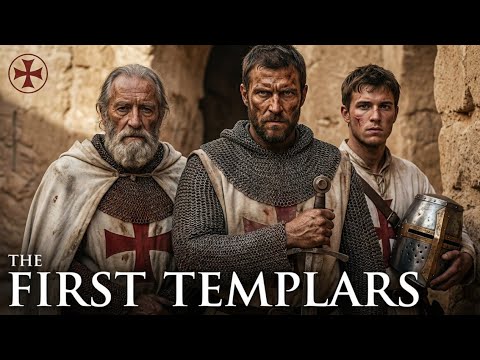
Déroulement de la vidéo:
0.24 They had traded the promise of eternal glory for
a begging bull and an old horse they were forced
6.0 to share. Nine broke knights sworn to poverty who
would in a few decades possess more gold than all
14.24 the crowned heads of Europe combined. How does a
man build an empire of unimaginable wealth on a
22.48 vow of absolute destitution? The heat of the
Jerusalem summer of 1119 was not a dry clean
30.56 furnace. It was a smothering feted blanket of
filth and human misery clinging to the sweaty
37.28 walls of the holy city. Below the golden dome
of the church of the holy supplr where the very
43.6 promise of Christianity lay enshrined Ugans knelt.
He wasn’t praying. His spine was poker straight,
52.48 and his eyes, usually the color of
chipped slate, were squinted against the fierce sun. He felt the familiar low
burning throb of his war scars, a deep,
63.36 ugly slash across his shoulder from the siege of
Antioch, and a constant ache in his right thigh,
69.6 a painful souvenir of a nasty skirmish near Ty.
These scars weren’t mere memories. They were the
76.72 ledger of his failures. A minor French nobleman, a
crusader who had failed to carve out a territory,
83.84 Ugans was now little more than a skilled swordsman
without a feudal lord, a broke mercenary in a
91.44 conquered land already drowning in mercenaries.
Beside him knelt eight other men. They were a
99.2 ragtag collection of European noble cast rejects,
all equally thwarted in their ambitions. Knights
106.16 from Flanders, Provence, and Champagne,
each possessing a fighting skill that vastly
111.68 outstripped their fortune. Among them, Godfrey de
Staint Omare, a Flemish brute with a gentle oxlike
119.04 face, shifted his weight uncomfortably. They were
waiting for an audience with King Baldwin II, and
125.6 the wait was humiliatingly long. « Look at them, »
whispered Gondmar, a man from Provence, whose once
133.12 fine ciat was now patched with the rough cloth
of a pilgrim. « The priests of the Sephiler, fat,
139.76 scented, counting their goldplated cups, and us
who put them here, we wait like bums. » Ug didn’t
148.08 respond, but the sentiment was a stinging insult
to his pride. The first crusade had succeeded,
154.16 establishing the fragile, bloody kingdom of
Jerusalem, but its success immediately birthed
160.0 a lethal problem. The pilgrimage routes from the
coast to the holy city were choked with bandits,
166.24 rogue sarissers, and greedy Christian highwaymen.
Tens of thousands of pious pilgrims were being
173.52 robbed, assaulted, and slaughtered every year. The
established military orders, like the hospitalers,
180.16 were focused on caring for the sick and wounded,
not policing the treacherous roads. King Baldwin
186.24 II’s small force was spread thin, consumed by
defending the kingdom’s borders. Nobody was
192.72 protecting the path to salvation. This was the
critical vacuum Ug had spotted. It was a space
199.84 that required more than courage. It required an
organizational genius that bordered on fanaticism.
207.2 When the massive wooden doors finally creaked
open, they were ushered into a small, suffocating
212.88 chamber. King Baldwin II was thin and anxious,
seated on a simple stool, listening to a frantic
219.92 report from one of his officers about a caravan
massacre near Cesaria. He waved the knights
225.52 forward with an impatient hand. your grace. We are
nine men, nine who have fought for your kingdom
232.72 and who see what happens on the roads. The blood
of the devout soaks the earth, and the path to the
238.24 supplr is a slaughterhouse. It is a disgrace, and
it is a wound to all Christendom that will fester
244.72 into open rebellion. Baldwin sighed, rubbing his
temples. And you propose to solve this with nine
252.08 swords? I have 900 men and still I can’t seal
the path from Jaffa. What exactly is your plan,
259.52 Ug? You’re an honorable man, but you’re a man
without land, without title, and without cash.
266.16 This was the brutal truth that Ug immediately
turned to his advantage, using the king’s contempt
271.92 as the foundation for his outrageous gamble. He
locked eyes with Baldwin, his voice dropping to a
277.92 harsh absolute conviction. We do not ask for land.
We do not ask for money. We ask for nothing but
286.96 the solemn promise itself. We will take the full
monastic oath of poverty, chastity, and obedience,
294.0 but to a singular brutal purpose, the armed
protection of the pilgrims on the king’s highways.
301.44 The statement hung heavy in the air, a shocking
contradiction. To take the solemn vows of a
307.28 secluded monk, and yet carry a sword for the
purpose of systematic, lethal violence was utterly
314.08 unprecedented. The established church would
certainly condemn it. It was a brutal, pragmatic
320.56 merger of the cross and the blade. Baldwin stared,
momentarily stunned. He saw the fire in Ug’s eyes,
328.48 the stark, hungry dedication shared by the eight
men behind him. They were offering to perform
334.0 a vital, dirty, and expensive task for free. A
monastic order of fighting men, Baldwin muttered,
342.48 a flicker of dark amusement crossing his face.
« You will have no lands to payans, no holdings.
348.96 I can give you but an oath and the disdain of the
priests. The oath is all we require, your grace,
356.24 Ug, a ghost of a smile touching his lips. He
wasn’t asking for a handout. He was demanding
362.8 a political and religious charter. Baldwin ran
a hand over his tired face. Fine, I permit this
371.36 order. I can grant you sanctuary, meager though
it is. I can house you near the king’s own palace
377.28 on the temple mount. But understand this dep.
You will be called the poor fellow soldiers of
383.36 Christ and the temple of Solomon. You will
have the south wing of my stables. It is falling apart and overrun with rats. You will
have no revenue. You will be nine men sharing
394.08 one ragged horse between two fighting against an
ocean of enemies. You will fail. We will not fail,
402.96 Ug said simply, accepting the king’s insult as
his order’s first most crucial asset. a place
409.84 in the king’s own backyard, a foothold on the
holy rock of the temple mount itself. He bowed,
417.2 a masterfully executed gesture of humility that
completely masked the triumph surging through
423.12 him. The king saw nine desperate poor knights. Ug
saw the first nine bricks of an empire. As they
431.28 left the stifling chamber, Ug turned to his men.
His eyes were cold, calculating. King Baldwin has
438.72 given us an order and a hvel. The Pope will give
us legitimacy. St. Bernard will give us a rule.
446.08 But we, he lowered his voice, we will take
what they cannot give. The absolute, total,
452.64 unyielding power of trust. Now, let’s go check out
the stable. The men followed him toward the temple
460.48 mount, leaving the opulent, suffocating heat of
the sephiler behind. There were nine impoverished
466.96 men walking toward a derelic barn. But in Ug’s
mind, the cornerstone of the most formidable
473.12 secret society the world had ever known had just
been laid. He had the scarcity, the desperation,
480.4 and the laser-like focus. The road to power began
with a vow of nothing. He had to keep them poor,
488.0 keep them dedicated, and above all, keep their
secret. that their true mission was not just
493.68 protecting the road, but establishing a network
that would ultimately eclipse the very kings they
499.68 served. The grit of Jerusalem’s dust stuck to his
boots, a perfect symbol for the gritty, hard one
507.12 future he saw stretching ahead. The southern wing
of the royal stables, the temple of Solomon that
514.08 King Baldwin II had so carelessly bestowed upon
them, was not merely neglected. It was actively
521.44 hostile. It was a vast crumbling stone structure,
the ancient remnants of Herod’s glorious platform,
529.76 now used as a glorified manure pit and a storage
facility for broken siege equipment. The odor of
537.12 stale urine, horse sweat, and decay was a physical
presence, thick and suffocating. This was their
544.8 headquarters, their monastery, their castle, a
dilapidated barn. given over to the poor fellow
551.76 soldiers of Christ. Hug’s deayens stood in the
cavernous space, dust moes dancing in the shafts
560.4 of light that pierced the broken roof tiles. His
eight fellow knights stood behind him, their faces
567.04 a mixture of disappointment and grim resolution.
The king had given them no furniture, no stores,
574.32 and no money. Their entire initial wealth
consisted of the nine suits of armor on their
580.32 backs, the few coins sewn into their tunics, and
the single aging gray horse they were now forced
586.96 to share between pairs. Look around you brothers.
Hug’s voice echoed in the desolate space,
594.64 cutting through the silence. The king intends
for us to fail. The hospitalers laugh in their
601.28 silklined infirmaries. The patriarch of Jerusalem
sees us as nine more hungry mouths. This is not a
609.2 slight but an opportunity. Godfrey de Santoare,
the largest of the group, was already rolling up
616.48 his sleeves. An opportunity to clean a very large
latrine. Huges, where do we even sleep? The floor
623.2 is slick with years of filth. We sleep on the
floor. Where do we eat? We beg, Huges commanded,
631.44 his eyes gleaming with a fierce, almost aesthetic
zeal. He understood the tactical value of poverty.
639.28 If they were seen as a conventional military
order, they would be judged by their resources and
644.64 their size, and they would be crushed. But if they
were seen as something other, something radically
651.2 spiritual and utterly destitute, they would be
judged by their piety. It was a camouflage of
658.16 virtue. Their first year was a grueling ordeal of
deprivation. They took shifts guarding the walls
665.76 and patrolling the most dangerous stretches of the
Jerusalem Jaffa road, a stretch of duty that saw
672.0 them constantly outnumbered, yet miraculously
surviving. When they returned, they subsisted
678.48 entirely on charity. Huges instituted a brutal
Spartan routine. Long hours of prayer followed
686.08 by rigorous combat training, all while wearing
their heavy unwashed armor. Food was scarce. They
693.28 became gaunt, their faces hollowed out, their eyes
burning with feverish intensity. Huges was not
700.16 exempt. He was the most auster among them, selling
a finely crafted silver crucifix, the last remnant
707.52 of his minor aristocratic lineage, to buy feed
for their single shared horse. He enforced the
714.48 now famous yet deeply pragmatic rule. Since they
had so few horses, they would ride two to a beast,
722.4 a practical measure of economy that quickly became
the enduring powerful symbol of the Templars on
728.72 their seal. The image of two knights sharing one
charger. One night, Gandmar, the provenal knight,
737.76 snapped. They were huddled in the cold stable,
shivering, their stomachs empty. This is madness,
744.8 Huges. We are knights of noble birth. We could
be serving any count in the crusader states for
750.56 a rich wage. Instead, we are begging for stale
bread from pilgrims we are supposed to protect.
756.96 We are dying of shame and hunger. Gandmar spat the
words out. Hug stepped towards him, his movement
765.28 precise and terrifyingly calm. He didn’t raise
his voice, which only made his response colder,
771.84 sharper. Shame. Shame is retreating from a
fight. Hunger is discipline. When we die,
780.32 brother, we will not die in comfort, cushioned
by the wealth of a frivolous lord. We will die
786.4 fighting the saras, stripped bare, having taken
nothing from this world. That is our power,
793.12 Gandamar. Every man who sees us, filthy, hungry,
and defiant, knows we have no self-interest. They
801.76 know we fight only for the cross. That belief
is worth a thousand armies. That belief will be
809.12 our first treasury. Gandmar fell silent, defeated
not by force, but by the undeniable intoxicating
818.64 power of Hug’s ideology. The order was not
meant to make the knights comfortable. It was
824.8 meant to make them indispensable. This period of
forced absolute poverty served a dual purpose in
832.8 Hug’s long-term plan. It forged an unbreakable
internal loyalty, creating a cadre of men who
840.16 had suffered together and believed themselves
chosen for a divine purpose and it created a
846.56 powerful public narrative. News began to spread
through the crusader states and back to Europe.
852.72 The poor fellow soldiers, nine nights living in
abject poverty in the king’s stables, dedicated
859.36 solely to the dangerous work of protecting
pilgrims. This narrative of self-sacrifice
865.6 was the perfect political weapon. Huges knew
this fragile structure needed a powerful
871.92 external patron to survive its second year. The
hospitalers were already moving against them,
878.48 lobbying the local bishops to declare their
unorthodox fusion of monasticism and military life
884.8 heretical. « We are too weak for Jerusalem, » Huges
announced to his men one freezing morning. « Our
892.56 fame must precede us. We need a voice in Europe, a
powerful sword in the heart of Christrysendom that
899.04 can crush our critics before they even speak. »
He chose Andre de Mombar, a formidable wealthy
906.8 knight from Burgundy as his ambassador and future
recruit. But the real target was Andre’s relative,
914.88 Bernard of Clairvo. Bernard was not just any
monk. He was the spiritual conscience of Europe,
922.56 the most powerful man in the church who wasn’t
the Pope. Huges knew that if Bernard wrote their
928.8 rule and spoke for them, their legitimacy would
be ironclad, their reputation absolute. Huges
937.04 prepared for the journey back to Europe,
a monumental undertaking that required him to leave the fledgling order in the hands of
Godfrey Desto. As he strapped his saddle bag,
948.96 containing little more than his worn breviary and
the patent from King Baldwin, he looked one last
955.36 time at the squalid sacred space they had endured.
The filth had been cleaned, the walls were bare.
962.88 The temple of Solomon was a ruin, but Huges had
imposed a terrifying singular discipline upon it.
970.56 When I return, Huges promised Godfrey, his voice
barely audible. We will have more than a name.
977.68 We will have a destiny. Guard the roads, brother.
And remember, every day you go hungry, every hour
985.44 you suffer is a prayer that Europe will pay for.
The long gruelling ride from the parched chaos of
993.36 Jerusalem to the damp green order of Champagne
France was its own kind of pilgrimage. Hughes
1000.96 Deeens weathered and lean arrived in the county
of Champagne in 1127 not as a triumphant crusader
1009.28 but as a beggar dressed in armor. He carried the
king of Jerusalem’s official yet meager sanction
1017.36 and an unofficial yet monumental ambition. He
first sought out his cousin Bernard of Clairvo,
1025.2 the abbot of the Cistersians. The Clairvo Abbey
was a vision of severe unyielding purity, stone,
1033.52 water, and silence. Bernard had made his
name by rejecting the gilded excesses of the
1040.56 older Benedictine houses. His rule was harsh, his
sermons were fire, and his moral authority spanned
1048.48 every court in Europe. Hughes knew that Bernard’s
endorsement was worth more than a thousand lances.
1056.16 It was the absolute seal of divine approval. He
was received in a cold, sparsely furnished room.
1064.48 Bernard, a man whose fierce intellect seemed
to consume his physical body, was frail,
1071.12 yet his gaze held a hypnotic, terrifying clarity.
He looked at Hughes, not with familial affection,
1079.04 but with the cold, analytical judgment of a
spiritual auditor. Cousin, Bernard’s voice
1086.4 was ready, but carried the weight of destiny. I
hear your story. Nine men sleeping in the king’s
1094.4 manure pit, sharing one horse, risking death daily
to protect the weak. A paradox, a military order
1103.28 that accepts the vows of a contemplative monk.
It is either an act of singular divine grace,
1110.96 or it is heresy disguised as piety. Hughes had
rehearsed this moment for 2 years. He knelt, not
1119.36 out of custom, but out of calculated necessity.
We are simple soldiers, Bernard. We saw the chaos,
1127.12 the failure of the princes, and we chose to
surrender all earthly attachment to end it. We are
1134.0 poor that Christ may be rich in his followers. We
seek to redeem our violent trade through absolute
1141.2 self-sacrifice. He placed the worn parchment of
King Baldwin’s charter on the table, along with a
1148.16 crude but heartbreaking sketch of the two knights
sharing a horse. Hughes didn’t speak of strategy
1154.88 or finance. He spoke of the pilgrims bleeding
feet, of the shame of Christryendom, and of the
1161.2 purity of their destitution. He sold Bernard not
on a fighting force, but on a divine metaphor.
1169.12 Bernard sat in silence, absorbing the narrative.
He was the architect of faith. Hughes was the
1176.24 architect of power. For Bernard, this new order
was the perfect tool to reform the corrupted
1183.2 nobility, a way to channel the aristocratic
urge for violence into selfless, holy purpose.
1191.12 The vision is pure, Bernard finally conceded,
a dangerous enthusiasm lighting his eyes. But a
1198.64 body without a soul is a corpse. You need a rule,
Hughes. A Latin rule, strict, unwavering, and holy
1207.84 cisters to protect your spiritual integrity.
I will write it. I will write to the Pope and
1215.44 the cardinals. I will call a council, but you must
swear to uphold the austerity of the rule, and to
1222.8 forever remain outside the politics of the world.
Hughes knew that this was the price of legitimacy,
1230.72 a commitment to spiritual aestheticism that would
ultimately clash with his secular vision. He met
1237.28 the abbott’s gaze with flawless conviction. We
swear, cousin, our obedience will be absolute.
1244.56 He knew that an oath made to a man near
death was merely a foundation, not a cage.
1252.0 With Bernard’s powerful endorsement secured,
Hughes turned immediately to his second far more
1258.64 pragmatic target, Andre Deondborg. Andre was a
powerful landowner and a celebrated battlehardened
1266.56 knight from Burgundy. He was Bernard’s uncle,
yet he had no interest in spiritual purity.
1273.12 Andre was driven by legacy, power, and the shrewd
acquisition of influence. Hughes met Andre not in
1281.04 a monastery but in a noisy tavern outside Djon
amidst the clamor of mercenaries and merchants.
1288.56 The abbott speaks highly of your holiness Hughes.
Andre remarked swirling a tankered of wine,
1294.72 his eyes cynical and assessing. But I know you.
You are a mercenary of the highest skill, one who
1302.48 failed to claim a castle and has instead claimed
a religious charter. You didn’t return from the
1308.8 east for a sermon to pay. You returned for power.
Hughes smiled. A rare chilling expression that
1317.2 acknowledged the truth. Power requires resources,
Andre. And resources are what Bernard’s rule will
1324.32 grant us. Do you know what a papal order means?
It means we will be taxexempt. It means we will
1331.92 answer to no king, no count, and no local bishop.
We will operate outside the secular system. He
1340.48 leaned in, his voice low and intense. The king
of Jerusalem gives us the temple mount. Bernard
1347.6 gives us the faith of Europe. But that faith
will translate into donations, land, coin, men,
1355.76 untaxed, unaccounted for, and freely mobilized
across every border. Andre, we are building not
1363.68 a castle but an independent nation of capital
with Jerusalem as its untouchable head. Andre
1372.0 De Manbour’s eyes, cold and calculating, finally
lit up with interest. This was the language he
1379.04 understood, the language of strategy and absolute
control. I am an old dog, Hughes. I have no
1387.44 patience for prayer and sharing a horse, Andre
said, his large hand resting on the hilt of his
1393.68 sword. I will bring my wealth and my formidable
reputation to your order. I will be your second in
1401.28 command and your future grandmaster, but only on
one condition. Hughes waited, the air thick with
1410.24 tension. This was the moment where the spiritual
promise of the Templars would be irrevocably
1416.32 corrupted, or as Hughes saw it, functionally
completed. « You promised Bernard a pure monastic
1424.0 life, » Andre continued, lowering his voice until
it was a harsh rasp. « I demand the opposite.
1432.08 You must swear to me here now without any priest
as witness that you will use Bernard’s piety as
1440.08 a cloak that you will prioritize the acquisition
and defense of the order’s financial empire over
1447.52 any local king or papal demand that when the time
comes we will choose the gold over the glory. You
1456.48 must swear that the order will become rich. Hughes
did not hesitate. The king of Jerusalem gave him
1464.64 his name. Bernard gave him his soul’s covering.
Andre de Manard was offering him his ultimate
1472.32 engine. I swear it, Hughes said. Sealing the
pact with a grip that bruised Andre’s hand. The
1480.4 piety is the key to the vault, Andre. And once
we are inside, the rule is only a suggestion.
1488.64 Andre De Manbboard became the 10th founding member
of the Templar Order. He was the dark soul Hughes
1495.84 had needed, the man who would ensure that the
order, once armed with Bernard’s pious rule, would
1502.64 ruthlessly pursue Hugh’s grand secular goal. With
Bernard committed to securing their legitimacy at
1510.32 the Council of Troy and Andre committed to
securing their internal power, Hughes began
1516.56 his European tour, leaving behind him a trail
of strategically placed influence. The Templars
1523.68 were no longer nine desperate men. They were an
idea blessed by a saint and funded by a future
1531.36 financial titan held together by two contradictory
yet equally powerful secret oaths. Hug Deans was
1540.32 gone sailing toward the great council of Troy and
the political maneuvering that would make or break
1546.08 the order. In his absence, the remaining eight
knights in Jerusalem, the poor fellow soldiers,
1552.4 found themselves facing a coordinated internal
threat far more dangerous than any sar patrol.
1559.2 Envy. The established orders, particularly the
powerful, well-funded hospitalers watched the
1566.08 public adoration Hug had cultivated with growing
resentment. The narrative of the nine starving,
1572.24 self-sacrificing knights living on the actual
ground where Christ had walked was a powerful
1577.92 indictment of the other orders increasing wealth
and political comfort. The whispers began subtly
1584.64 circulated by hospitaler agents among the priests
and petty nobles of the kingdom of Jerusalem.
1590.4 The Templars were heretics. Their strange
monastic military fusion was an abomination.
1596.72 They worshiped a demon under the temple mount.
They were secretly agents of a powerful rival
1602.56 European count. Godfrey de Santoare, the interim
commander, felt the siege of slander tightening.
1610.32 They were finding it harder to secure charitable
donations. The local patriarch refused to hear
1615.92 mass for them, and one of their own men, the
fiery Gondmar, began to waver under the pressure.
1622.24 They call us the riders of the beast, Godfrey.
Gondmar hissed one evening in the desolate stable
1627.76 headquarters. They say the reason Hugh ran to
Europe is to find the gold he needs to pay off
1633.44 the devil. We are starving while they feast,
and they call us the corrupted ones. Godfrey,
1640.08 a giant of a man, stood before the worn Templar
seal, the image of the two men on one horse,
1646.64 and felt the weight of Hug’s trust. He was
a soldier, not a politician. He was sworn to
1652.72 the action of defense, not the art of deception.
Hug told us that the rule is absolute, brother.
1659.84 We fight the sar. We protect the roads. Let our
purity of purpose be our defense. But purity was
1667.04 no defense against a poisoned lie. The final blow
came when King Baldwin II, bowing to pressure from
1674.32 the hospitalers and the local clergy, sent a royal
decree limiting the Templars’s access to the city
1680.4 gates. effectively crippling their ability to
patrol the pilgrim roots and collect the meager
1685.92 offerings that kept them alive. The mission
was paralyzed. The order, barely 2 years old,
1692.24 was collapsing under the weight of political
infighting. In this moment of absolute crisis,
1698.56 Payne de Mondetier, a quiet, often overlooked
knight from Piccardi, stepped forward. Unlike
1705.44 the others, Payne had not been driven by
military fame. He was a man of intense dark
1711.36 spiritual devotion. He had studied the ancient
histories of the Temple Mount, the Jewish temple,
1717.76 Herod’s constructions, the very foundational
myths of the holy rock beneath them. They
1723.68 attack our purpose because it is too simple, Payne
explained, his voice low and conspiratorial. They
1730.64 attack our poverty because it shames their wealth.
We must give them a reason to be terrified of us.
1737.28 We must give the order not just a defense, but a
myth. Payne led Godfrey and the remaining knights
1743.84 through the ratinfested undercraftoft of the
king’s stables, past the crumbling foundations
1749.2 of the old wall until they reached a section Hug
had strictly forbidden them to explore, a sealed
1755.52 offistn that led to the deep substructures of the
temple platform. This area was known in local lore
1762.72 as the legendary location of the Holy of Holies of
the ancient Jewish temple. « For two years, we have
1769.6 lived above the Holy of Holies, » Pain whispered,
lighting a sputtering torch. « The hospitalers
1775.84 claim we are unworthy. We will counter their claim
by suggesting we possess the most important relic
1782.4 in all Christrysendom, a discovery only granted
to those deemed pure enough to dwell in poverty. »
1789.76 Godfrey stared at the black opening, a profound
unease gripping him. « Are we to lie, Payne? To
1796.56 fabricate a relic? Hug forbids all vanity. » « Hug
understands political necessity, » Payne countered,
1804.32 tapping the wall with the butt of his dagger.
« We do not need to find anything. We only need
1810.4 to control the whispers. » « The hospitalers say
we worship demons. We will allow the whispers
1816.48 to shift that we have instead unearthed the ark
of the covenant or the true cross or a forgotten
1822.48 relic of Christ himself. That our poverty is
not humiliation but the sacred duty to guard
1828.96 the untouchable. The strategy was brilliant
and terrifyingly cynical. By embracing and
1835.92 manipulating the rumors of the mystical temple
substructure, the Templars turned their location,
1841.92 their greatest physical weakness, into their
greatest spiritual advantage. They began
1848.16 subtly feeding the story. Strange noises
heard deep beneath the stable. A sudden,
1854.24 deep conviction among the knights, the silent,
fierce protection of the sealed off sistern.
1859.84 The effect was instantaneous and electrifying.
The whispers of heresy did not vanish, but they
1866.16 transformed. Priests who once scorned the order
now regarded the nine knights with fear and awe.
1872.64 Were they mad men, or were they truly guarding
a divine secret that justified their strange,
1878.96 brutal existence? The fear of interfering with a
divinely sanctioned mission and risking the wrath
1885.36 of God for disturbing a sacred relic froze the
hospitaler’s plot in its tracks. The narrative
1891.92 of the poor fellow soldiers shifted overnight
from pitiful destitution to sacred custodianship.
1899.12 Pilgrims began leaving offerings of food and coin,
no longer out of pity, but out of desperate hope
1905.36 that the Templars would pray for them over the
secret hidden power beneath the temple. When
1911.36 the news of the strategic reversal reached Hug
Depayans in Europe, he was profoundly satisfied.
1917.68 He had left behind soldiers. His absence had
forged politicians. The order now possessed not
1924.08 just a physical location, but a foundational myth
of power. This myth, the whisper of the relic,
1930.72 was the perfect psychological lever. It would be
used at the Council of Troy to secure not just
1936.4 a rule, but a sense of divine destiny that would
justify the boundless wealth Hug was preparing to
1942.88 unleash. In Jerusalem, Godfrey de Sanare ordered
the sistern entrance permanently walled up, hiding
1950.4 the secret of the non-relic. The crisis had been
averted, and the true dark heart of the Templar
1956.96 Empire. The ability to weave piety, myth, and
hard pragmatism into a single unbreakable cord was
1964.96 now fully operational. The year was 1128. While
Hoo Deepans was traversing Europe, successfully
1973.04 weaving the necessary political and religious web
around the future order, the knights left behind
1979.04 in Jerusalem finally proved their military worth
in a baptism of blood. King Baldwin II, skeptical
1986.56 but desperate, had commanded the remaining
Templars to join a major campaign against the rising threat of the Emirate of Damascus, led
by the formidable General Bur. The mission was to
1998.48 escort a large, valuable caravan of supplies and
non-combatants north along the treacherous Jordan
2004.64 River Valley to the fortress of Bowfort. This
region was a mosaic of dense thicket, steep wadis,
2012.08 dry riverbeds, and ancient ruins. Perfect
territory for an ambush. Godfrey de Sanare,
2019.04 now acting grandmaster, led his small detachment
of knights, supplemented by a handful of reliable
2024.96 mercenaries. Their numbers were still poultry,
but their discipline was absolute. Godfrey,
2031.76 massive and silent, rode beside P and de
Montidier, the same knight who had conceived
2036.8 the relic myth in the stable. Pan was now applying
his cynical genius to military logistics. Bur’s
2044.56 scouts will be watching the main caravan road,
Pan muttered, surveying the sunblasted hills.
2050.56 They will count our numbers and assume we
are protecting the baggage train, relying on sheer bulk. We must use our smallalness as our
advantage. Godfrey nodded. Hoo taught us to never
2062.8 fight like an army. We are a needle, not a hammer.
The Templars, each pair still riding the famous
2070.64 single horse, a stark image that unsettled even
their own mercenaries, acted as the advance guard.
2077.68 Instead of staying visible, they deliberately used
the wadis and thickets, creating the illusion of
2083.36 patrolling ghosts. This calculated movement forced
Bur’s commander, a Turkman named Sheru, to split
2090.88 his forces to cover multiple points, stretching
his ambush thin. The inevitable attack came at
2097.68 dawn near the river Yarmmuk. Shiru’s forces, far
superior in number, burst from the river thicket,
2104.64 aiming to cut the main caravan in half and seize
the supplies. Godfrey ordered his small unit not
2111.2 to engage the main body, but to execute a brutal
focused counterattack against Shiru’s command
2117.2 element, which was located on a high bluff
overseeing the ambush. We fight for the pivot,
2123.52 not the line, Godfrey roared, drawing his massive
two-handed sword. Remember the staple. We are nine
2130.72 men and we fight like 900. The ensuing clash was
a masterpiece of desperation and discipline. The
2139.04 Templars, using the limited space and their heavy
Frankish armor, charged uphill, their combined
2145.44 weight and singular focus smashing through the
lighter Turkman cavalry. They did not hold a
2151.28 position. They simply executed a lightning fast
lethal path towards Shiru. Godfrey was everywhere.
2158.48 His great sword a blurring arc of silver creating
space for his comrades. The shared horses trained
2165.2 for this brutal close combat moved with unnerving
coordination. They fought not for territory
2171.76 but to cause maximum psychological collapse.
Gondmar, the knight who had previously wavered,
2178.16 now fought with a savage joyous fury, avenging the
humiliation of the past years. He drove his lance
2185.2 through a Turkman captain, securing a momentary
breach in the line that Pan de Montidier instantly
2191.2 exploited. Pan reached the bluff, pulled Sheriku
from his saddle, and executed him with a swift,
2197.68 brutal thrust, sending the general tumbling down
the hill in full view of his astonished troops.
2204.24 The sight of their commander falling, combined
with the impossible ferocity of the armored monks,
2209.92 shattered the Turkman morale. The ambush
quickly devolved into a massacre. Bur’s forces,
2216.64 lacking direction, broke ranks and scattered,
leaving behind scores of dead and a rich hall of
2222.48 captured horses and banners. The Templars had not
just won the fight, they had changed the terms of
2228.96 engagement. They had proven that their discipline
and fanatical belief made them exponentially more
2235.36 lethal than their small numbers suggested. They
had successfully navigated the needle strategy,
2241.84 puncturing the enemy’s heart. When King Baldwin
II’s main forces finally arrived, they found the
2248.24 caravan untouched and the battlefield littered
with the enemy dead, guarded by the handful of
2253.68 weary, blood soaked Templars. He was stunned. He
saw not beggars, but the most effective fighting
2260.56 force in the crusader states. The victory, dubbed
the massacre at the Jordan, was a catastrophic
2267.36 defeat for Damascus and a military triumph for
Jerusalem. The chronicers immediately seized
2273.84 upon the Templars, transforming them from an
oddity into the shield of Christ. Crucially, King
2281.12 Baldwin II was forced to reckon with the order’s
value. The victory had cost the royal army little,
2287.6 yet yielded massive strategic gains. He could no
longer afford to let the hospitalers slander them.
2294.72 The king met Godfrey days later, his face grim
with realization. « You have proven your worth,
2300.48 Desanomeare. You have done what my armies could
not. I can no longer offer you ratinfested
2306.88 stables. » As a direct result of the massacre at
the Jordan, King Baldwin II granted the Templars
2313.6 their first major land concession, a large
estate near the coast, complete with villages,
2319.52 revenue, and critically full taxexempt status
for all Templar holdings within the Kingdom
2325.52 of Jerusalem. This was the first breach in
Hug Deean’s commitment to absolute poverty,
2331.36 and it was a strategic necessity forged in blood.
The order had moved from being a symbolic idea
2338.16 to a landholding financial entity. As Godfrey
surveyed their new vast property, their first
2344.64 true source of untaxed revenue, he felt a profound
satisfaction. They had suffered the shame of the
2351.28 stable to earn the gold of the kingdom. He looked
north toward the sea, knowing that Hoo would soon
2357.76 return from Europe with the spiritual charter.
The Templars were no longer fighting for survival.
2363.68 They were now building a foundation of wealth that
only needed the blessing of a saint to become an
2369.2 unstoppable power. The poverty of act one was
officially over. The council of Troy convened
2377.2 in January 1129, not in a grand cathedral, but in
the intimate and politically charged setting of a
2384.88 count’s manner. This was not a general council
but a highly curated gathering of cardinals,
2391.36 archbishops, and powerful noble patrons designed
specifically to address the spiritual status of
2398.8 Hug Depay’s unconventional order. Hug arrived
in France from his successful tour of the courts
2406.08 where he had secured significant donations of
land and men. He was no longer the broke nobleman.
2413.28 He was a political celebrity, the head of the
famed poor fellow soldiers, whose recent bloody
2420.4 victory at the Jordan River had made them the
military darlings of the crusader cause. Yet
2426.96 Hug knew all this success was hollow without the
spiritual lock he was here to secure. His cousin,
2434.8 Bernard, Abbott of Clairvo, dominated the room.
Bernard, frail yet radiating an almost palpable
2443.44 divine authority, had meticulously arranged the
council. He saw the Templars as his personal
2450.16 project, a spiritual purification of knighthood
itself. He had ensured that the focus was less on
2457.6 the order’s military effectiveness and more on its
theological legitimacy. The conflict between the
2465.44 two men was immediate and silent. Hug had promised
Bernard absolute obedience and spiritual purity.
2474.8 Bernard in turn had prepared a rule for them, the
strict austere cisters code designed to strip the
2482.72 knights of all worldly vanity. The first day was
spent listening to testimony from Hug’s recruits
2490.24 and patrons. The narrative of the nine starving
men sharing a horse while guarding the sephiler
2496.64 resonated deeply with the aesthetic reformist
mood of the church. The strategic ambiguity
2503.52 of the relic under the temple chapter 4 also
worked its psychological magic, cloaking the
2510.88 order in an unassalable aura of sacred destiny.
On the second day, Bernard took the floor. His
2519.12 sermon was a stunning piece of theological
brilliance, successfully arguing that the
2524.48 violent life of a knight could through the vows
of a monk be redeemed and sanctified. He coined
2531.84 the term for the Templar warrior, malice of the
cross, not murder, but malicide, the killing of
2540.4 evil. This was the spiritual permission the order
needed. Then Bernard revealed the Latin rule he
2549.52 had drafted. It was far more restrictive than Hug
had anticipated. It banned all finery, red coats,
2558.16 pointed shoes, extravagant weapons, hunting,
and most critically, private correspondence,
2565.28 or any personal wealth. « You will be poor,
Hug, » Bernard dictated, his eyes piercing.
2574.72 Your men will know no pride. Their clothes will
be plain, their food simple. You must root out
2582.08 any ambition that strays from the salvation of the
pilgrim. You must be the spiritual vanguard, not
2589.36 a royal army. Hug listened, his face impassive. He
understood the strategic value of the rule. It was
2598.48 the spiritual high ground that guaranteed massive
donations. But he also understood the constraint.
2606.24 The rule was a blueprint for a monastery, not for
the international financial network he envisioned
2612.56 with Andre de Montbard. If implemented literally,
it would stifle his empire. The discipline is
2622.32 excellent, holy cousin, Hug responded, rising,
executing a perfect performance of devout
2629.2 humility. It is the perfect armor against worldly
temptation. We accept the rule. But he continued,
2638.0 turning his attention to the cardinals. The
order is unique. Its mission is eternal,
2645.12 crossing all borders. Its authority must be
equally unique. This was Hug’s counter gambit,
2653.84 accepting the spiritual constriction
in exchange for institutional freedom.
2660.4 The secular system works through local bishops and
regional kings. But if the Templars, the defenders
2667.44 of all Christrysendom, are subject to every petty
bishop in every remote corner of Europe, our
2674.56 mission will be fractured, our assets seized, and
our effectiveness destroyed. We will become tools
2682.08 of local lords, not soldiers of Christ. Hug was
arguing for an unprecedented level of autonomy.
2691.2 He needed the order to answer directly and only
to Rome, circumventing all local ecclesiastical
2698.32 and feudal authority. This exemption was the
true lever of future power. Bernard hated the
2706.16 political maneuvering, seeing it as a necessary
evil that risked tainting the sacred mission. The
2713.2 debate raged for hours. The cardinals recognizing
the military necessity of the order following the
2719.76 Jordan victory were swayed. They saw the value in
an untaxed, highly mobile elite force independent
2728.56 of squabbbling local powers. By the end of the
council, a compromise was struck. The Templars
2735.44 would receive official papal recognition and the
holy rule drafted by Bernard. A victory for the
2741.84 abbott. But Hug secured a verbal yet binding
papal exemption. The order would eventually
2748.88 report directly to Rome, granting them corporate
independence from local authorities. Hug stood
2756.16 before the closing assembly, accepting the white
mantle, the official uniform of the Templars. He
2763.2 was now Grandmaster Hug de Payenne. his creation
blessed by the church, sanctioned by the most
2770.88 powerful theologian in Europe, and shielded by a
rule that guaranteed their piety. As he embraced
2778.88 Bernard, Hug whispered, « The rule is severe,
cousin, but a severe rule rigorously applied to
2787.76 the public eye provides excellent cover. We shall
honor your words in spirit, but our methods will
2797.28 be our own. Bernard, exhausted, and perhaps
sensing the true dark trajectory Hug had set,
2806.08 simply stared back, a flicker of profound dread
in his eyes. He had created a spiritual weapon,
2814.8 but Hug had immediately secured the political
authority to ensure that weapon could never be
2822.08 truly disarmed or controlled. The shadow of
St. Bernard had blessed the order, but the
2829.84 sunlight of political expediency had already
begun to melt the edges of his strict rule.
2837.12 Following the council of Troy in 1129, Hug Deaines
did not return immediately to Jerusalem. Instead,
2844.96 he embarked on a calculated tour through the
administrative heart of the church, ensuring that
2850.16 the promises made at Troy were formally codified.
His final destination was Rome, where he sought an
2857.28 audience with Pope Hanorius II, leveraging Bernard
of Clairvo’s immense influence to secure the
2863.92 crucial papal seal. The Pope, wary of vesting too
much autonomous power in a nent military order,
2871.6 granted Huges the order’s official recognition,
confirming the Latin rule drafted by Bernard.
2878.32 This rule, the cornerstone of Templar life, was
for Huges a necessary constraint, a black code of
2886.16 unrelenting spiritual austerity. The rule dictated
everything. the plain unadorned white mantle,
2893.68 the mandatory short haircuts to avoid vanity, the
absolute prohibition of communicating with family,
2900.4 and the strict silence at meals and in the
dormatory. Private property was an anathema. Every
2907.28 shilling, every piece of bread, every horse was
communal, belonging solely to the order itself.
2914.24 Hugs, as Grandmaster, was now the spiritual
custodian of this code. The rule is the cage,
2921.76 Huges confided to his trusted future second in
command, Andre de Mombard, as they reviewed the
2927.6 final draft in Rome. A well- constructed cage is
often mistaken for a sanctuary. The church will
2934.16 see the poverty and the discipline and assume we
are easily controlled. Andre the pragmatist traced
2941.12 the lines of a clause forbidding the knights from
opening private correspondence. This is madness,
2946.64 Huges. If we cannot communicate privately,
how can we build the intelligence network you
2951.92 envisioned? How can we manage the flow of funds?
The rule is for the rank and file, Hug stated,
2959.28 his gaze fixed on the official papal seal that
authenticated the document. It creates the perfect
2965.84 unshakable soldier loyal only to the order with
no worldly ties to distract him. It ensures our
2973.84 spiritual brand remains impeccable. But it is not
a code for the inner circle. Huges revealed his
2981.44 first most crucial subversion of the black code.
He decreed that a small select group of knights,
2988.4 the future dignitaries and commanders, would by
necessity of administering the order’s growing
2993.84 European assets, be exempt from certain parts of
the rule, specifically those concerning finance
2999.92 and communication. This exemption was buried
within the administrative appendix of the rule
3005.76 masked by dense legalistic language. The rule
demanded that the knights live and fight under
3011.84 a banner that was half black, half white, the
Boseant, symbolizing the harsh contrast between
3018.24 the secular world they left behind and the
spiritual life they embraced. Huges embraced
3023.92 this dualism as the core of his operation. The
white side is for the public, for Bernard and
3030.88 for the Pope. It represents sacrifice. The black
side is for us, Andre. It represents the unseen
3038.08 operational depth, the secret handling of money,
the clandestine politics, and the accumulation of
3044.8 untaxed wealth. We will use the white side to
hide the black. Armed with the Pope’s official
3052.4 validation and Bernard’s sacred rule, Huges
now had the spiritual authority necessary to
3058.24 harvest the wealth of Europe. The image of the
poor knight was no longer a sign of weakness,
3063.76 but a guaranteed investment. Who wouldn’t donate
to an order that guaranteed the safety of their
3069.44 soul and the protection of their pilgrimages while
living on nothing? Huges immediately exploited
3075.76 the exemption clause. Before leaving Italy, he
used an initial large donation from a Lombard
3081.44 noble to establish the order’s first official
European commandery in Milan. This was not a
3087.44 military garrison. It was a secure fortified lodge
capable of receiving and holding gold, land deeds,
3094.4 and other valuable assets. This Milan commander
was the prototype for Hug’s grand secret design.
3101.68 It served two functions. a recruitment hub for
the best knights and more importantly a protobank.
3109.2 When nobles donated land or gold to the Templars
for the defense of the Holy Land, Huges did
3114.48 not ship the physical gold east, exposing it to
bandits and shipwre. Instead, he created a system
3121.36 of letters of credit. A French noble could deposit
100 gold pieces at the commander in Paris. He
3128.08 would be issued a coded sealed letter confirming
his deposit. When that noble arrived in Jerusalem,
3134.56 he could present the letter to the Templar
treasurer and receive his 100 gold pieces back
3139.92 minus a small administrative fee for the transfer.
This innovation, transferring wealth without
3146.16 transferring physical currency, was revolutionary.
It solved the medieval problem of dangerous travel
3152.56 and created the world’s first functioning
international banking and transfer system.
3157.68 Hugs realized that by making travel safer, they
were also making money safer. The fees earned from
3164.24 this service would in time generate astronomical
untaxed wealth, all while being hidden behind the
3171.04 pious facade of Bernard’s black code. As Huges and
Andre finally sailed for the kingdom of Jerusalem,
3178.8 the newly consecrated Grandmaster held the papal
seal in his hand. It was the instrument of his
3185.36 legitimacy, but he had already turned it into
the key to an unimaginable treasury. The years
3191.68 following the Council of Troy, 1129 to 1131,
marked Hug the Payne’s Grand European tour, a
3199.36 relentless three-year recruitment and fundraising
campaign that served as the true midpoint reversal
3205.2 of the order’s mission. Outwardly, the tour
was a pious mission to secure men, horses,
3210.56 and supplies for the defense of the Holy Land.
championed by the spiritual zeal of Bernard of Clarvo. Secretly, it was the systematic
construction of the vast decentralized
3221.28 taxexempt Templar treasury. Hug accompanied by
Andre Deonbard moved with the surgical precision
3228.64 of a master financier and diplomat. They did
not target poor common men. They sought out
3234.24 the most powerful, often guiltridden nobles
and kings. The presentation was flawless.
3240.24 Hug gaunt and aesthetic spoke of the shame of the
slaughter on the roads while displaying the papal
3245.84 seal and the austere black code. He offered nobles
a chance to buy their way to salvation through a
3251.6 donation to the only truly pious fighting force.
The response was overwhelming. In Portugal,
3258.64 Hug secured his first major territorial donation,
the castle of Sord, a strategic fortress on the
3264.8 contested border with the Moors. In Spain, he
received massive tracks of land across Aragon
3270.56 and Catalonia. In England, King Henry I granted
the order exemptions from customs duties and
3277.12 taxes on all their goods. Every donation of land,
gold, or privilege was immediately registered,
3283.76 cataloged, and organized into autonomous fortified
chapters called commanderies. Andre de Montbard
3290.96 working in the shadow of Hug’s piety ensured that
these commanderies were designed for finance, not
3296.56 just faith. They were not monasteries. They were
highsecurity vaults and fortified administrative
3302.56 centers. Every commander must have a strong room
and a dedicated scribe. Andre instructed his
3308.88 new European delegates. The gold stays here. The
land deeds stay here. We do not risk transporting
3316.16 bullion across the continent. We transport credit.
Hug’s letter of credit system began to flourish.
3323.52 Pilgrims and merchants terrified of the banditry
and unstable currencies of the era flocked to
3329.04 the Templars. They deposited their wealth at a
commander in London and retrieved it safe and
3334.56 secure at a commander in Paris or Marseilles,
paying the order a fee for the privilege. This
3340.64 system accomplished three critical objectives,
all masked by the spiritual mission. Revenue
3346.48 generation. The fees charged for safe transfer
and storage poured a constant compounding and
3352.24 completely untaxed revenue stream into the orders
coffers. Intelligence network. The commandery
3358.88 network became an unrivaled source of continental
intelligence recording the movements, wealth,
3364.4 and intentions of every major noble and merchant.
Financial independence. The Templars quickly
3370.64 amassed more liquid capital than most minor kings.
a fortune that was decentralized and protected by
3376.64 the combined authority of the pope and the myth of
their divine purity. The turning point occurred in
3382.8 the county of Anju where Hug negotiated with
a powerful baron. The baron seeking to clear
3388.64 his conscience after a lifetime of usery offered a
magnificent manor house and a vast tract of prime
3394.64 agricultural land, but only if the Templars swore
to keep the manor house as a house of prayer.
3400.88 Hug accepted the donation with profound humility.
Within 6 months, Andre Demanbard had converted
3406.8 the manor house into a secure, heavily staffed
processing center for the sale of the surrounding
3411.92 agricultural produce, transforming the land’s
raw value into liquid, transferable credit. The
3418.4 small chapel was maintained, but the majority of
the manor served as a logistics hub. The prayer
3423.76 was the smokeokc screen. The property was the
profit. This was the complete and final midpoint
3429.68 reversal. Hug the pen had started with a vow of
poverty chapter 1 and now through a masterpiece
3436.48 of political and financial deception commanded
the infrastructure of an international wealthy
3442.56 and politically autonomous corporation. He
had successfully taken the spiritual momentum
3448.0 generated by Bernard of Clairvo and irrevocably
converted it into secular hard power. By 1131,
3455.76 Hug was no longer the broke supplicant. He
returned to Jerusalem, not just with recruits,
3460.88 but with the deeds of dozens of estates across
Europe, an overflowing war chest of credit notes,
3466.4 and the full authority to bypass every feudal
lord and bishop. He stood on the battlements of
3471.84 the king’s palace, looking down at the recently
renovated stables, now a functioning commander
3477.12 and fortress. Godfrey De Santoare and the original
brothers were stunned by the scale of what Hug had
3483.28 accomplished. « We built a monastery, » Hug said,
looking at the newly arrived wagons packed with
3488.88 supplies and the dozens of fresh, wellequipped
recruits. « You built an empire. » Hugh placed
3495.28 a hand on the newly fortified wall, feeling the
cold, hard stone. « The monastery secures the soul,
3501.76 Godfrey. The empire secures the road. We are no
longer mere protectors of the pilgrim. We are the
3508.4 treasurers of the cross. And every king in Europe
will soon owe us more than just their prayers.
3514.88 The Templar order was now structurally complete,
a powerful, lethal fighting force in the east,
3521.44 backed by an autonomous, untouchable financial
engine in the west. Hug had achieved his greatest
3527.76 ambition, and the stage was set for the final
direct conflict with the secular authorities he
3533.28 had just surpassed. Hughes Deep Payans returned to
the kingdom of Jerusalem in 1131, not as the poor
3540.72 supplicant who had left, but as the grandmaster
of a politically untouchable, financially potent
3547.04 power. His arrival was marked by a lavish show of
force, dozens of welle equipped knights, superior
3553.68 horses, and coffers overflowing with European gold
credit, all visible evidence of the success of his
3560.48 three-year tour. This display, however, caused
immediate alarm in the highest circles of the
3566.56 crusader state. King Baldwin II, who had only
reluctantly granted Huges the derelict stables
3572.8 years ago, now watched the Templars’s meteoric
rise with profound suspicion. The king had hoped
3579.84 to use the Templars as a loyal, cheap military
instrument. Instead, they had become a financial
3586.48 rival and a political liability. The breaking
point came when Huges, using his papal exemption,
3593.44 began consolidating the numerous land donations
he had secured in the East, insisting that the
3599.2 Templar’s European funded assets were exempt from
all local tithes, taxes, and feudal levies. This
3606.56 was a direct unilateral assault on the king’s
revenue and authority. Baldwin II summoned Huges
3613.52 to his private chamber in the newly fortified
palace on the Temple Mount. He was flanked
3618.96 not by soldiers, but by the nervous patriarch of
Jerusalem and the master of the hospitalers, Hug’s
3625.68 greatest, most established rival. Grandmaster,
Baldwin began, his voice tight with controlled
3633.76 anger. I granted your order permission to defend
the roads, not to create a kingdom within my
3640.24 kingdom. You claim tax exemption on your European
assets, yet you refuse to account for the gold
3646.56 that funds them. This must cease. Hugs remained
perfectly composed. He knew this confrontation
3653.92 was inevitable. Your grace, we operate under the
seal of the supreme pontiff, Hug stated, his gaze
3662.08 meeting Baldwin squarely. The wealth of the order
is consecrated entirely to the defense of the Holy
3668.4 Land. To tax that wealth is to tax the piety of
every nobleman in Europe who trusts us. You risk
3675.6 offending the pope and the cistersians. The master
of the hospitalers stepped forward seeing his
3682.4 chance. The issue is not piety but sovereignty.
Hugs to pian you swore obedience to the church yet
3690.24 you defy the king who protects you. We demand
to see your charters, your financial ledgers,
3696.16 and proof of this supposed papal exemption.
This was the king’s gambit, demanding access
3702.4 to the orders records, which would immediately
expose the sheer scale of the untaxed assets
3708.08 and the functional reality of their banking
system. It would be the death of the treasury.
3714.64 Hugs performed the ultimate act of defiance. He
reached into his tunic and produced two documents.
3721.68 the original worn royal seal of King Baldwin II
granting the Templars permission to exist and
3728.32 the use of the stables, chapter 1, and a flawless
heavy vellum scroll bearing the official recent
3735.76 seal of Pope Anorius II. Huges dramatically
threw the king’s old seal onto the table. This,
3743.68 your grace, is the document that granted us our
existence when we were poor and you were doubtful.
3750.08 We are grateful for its historical curiosity. Then
he held the papal scroll high for all to see. But
3757.84 this, Huges continued, his voice ringing with
absolute authority. This is the final authority.
3764.8 By the will of Pope Anonorius II, ratified at
Troy, the Templar Order answers directly to
3771.28 Rome. We do not answer to the patriarch. We do not
answer to the hospitalers. and with due respect
3778.0 your grace in matters of finance and law related
to the order, we do not answer to the king of
3784.08 Jerusalem. He had essentially told the king that
his local secular authority was superseded by the
3791.44 Templar’s international ecclesiastical power.
Yuges had played his final most crucial card,
3798.56 the unilateral assertion of superior authority. He
used the sanctity of the papal seal to nullify the
3805.52 power of the royal seal. Baldwin too was a ghast.
He realized the fatal error he had made years ago
3813.12 by granting Hubes the land without demanding a
clear feudal binding tax contract. He had seated
3820.08 control of the order’s future. He had created
a legal loophole large enough for an empire to
3826.16 pass through. You betray the trust of your king.
Baldwin roared, smashing his fist on the table.
3833.84 Know your grace. Hugs corrected him, calmly,
picking up the king’s seal. I honor the sacred
3840.24 trust of every European pilgrim and noble who has
invested in the defense of this land. If you seize
3847.36 our assets, those donations cease immediately. The
roads will run red again, and the blame will fall
3853.92 on the crown that starved the soldiers of God. The
patriarch and the hospitalar master were silent
3860.48 recognizing the checkmate. To press the issue was
to provoke a catastrophic financial and religious
3867.36 fallout with the entire European church led by the
fanatical Bernard of Clairvo. The meeting ended
3874.56 abruptly. Hugs walked out victorious, having
publicly defied the king and established the
3880.72 order’s absolute independence. He had betrayed
the royal seal to uphold the promise of the papal
3887.36 seal. The Templars were no longer mere tenants
in the kingdom. They were a self-governing entity
3894.16 financed by the massive untaxed treasury. The next
phase would be to demonstrate that this political
3900.88 power was backed by lethal military force. The
public defiance of King Baldwin II required a
3908.48 dramatic military validation. Hug Deans understood
that the Templars, now financially independent and
3915.76 politically autonomous, had to prove they were not
merely gold collectors hiding behind a papal seal,
3922.72 but the most lethal fighting force in the Levant.
The stage for this demonstration was the powerful
3929.2 Egyptian fortress of Ascalon. Ascalon was the
last major fatimid stronghold on the Mediterranean
3936.24 coast, a perpetual dagger pointed at the heart of
the kingdom of Jerusalem. Its reduction was King
3943.28 Baldwin II’s ultimate strategic objective. In
1133, a massive siege was launched, uniting all
3951.28 the crusader forces, including the Templars and
their bitter rivals, the Huspilers. Hug deans, no
3958.72 longer commanding a mere handful of knights, led
a contingent of 100 well-armed, highly disciplined
3965.44 Templar brethren. Knights purchased and equipped
entirely with European credit. They wore the
3972.08 distinct white mantle, a visible, terrifying
banner on the dusty battlefield. The siege was
3979.12 long, brutal, and costly. The fortress walls were
thick, and the defenders relentless. The friction
3986.32 between the military orders was constant. During
a critical attempt to breach the northern wall,
3992.8 the hospitalers faltered under heavy fire. Hug
saw his opportunity not just for victory, but
3999.44 for establishing the order’s permanent superior
military reputation. He ordered a direct suicidal
4007.04 charge into the hospitaler’s collapsing line
utilizing the famed Templar charge, a disciplined
4013.84 heavy cavalry assault designed for maximum
psychological and physical shock. Leading the
4020.0 charge was Andre Deontbard, Hug’s ruthless second
in command and the man who held the secret oath
4026.48 to prioritize wealth. Andre fought with a savage
cold efficiency, his sword cutting down Sariss
4033.52 defenders who had overwhelmed the hospitalers. The
charge stabilized the line, turning a route into a
4040.72 decisive advance. However, the battlefield was not
the only place where lethal ambition was at work.
4048.16 Gondmar, the provinol knight, who had initially
questioned Huges’s mission of poverty, had become
4054.4 increasingly bitter. He saw the hypocrisy,
the wealth, the power, and the betrayal of
4060.88 the original aesthetic vows. He despised Andre De
Montbard, who represented the order’s secular dark
4068.56 heart. During the fiercest fighting near the siege
tower, a critical breach was made. Hugs, Andre,
4075.6 and a small vanguard rushed toward the gap, only
to be ambushed by a countercharge of elite Sariss
4082.32 warriors. Andre was fighting shoulder-to-shoulder
with Gondmar. Assar lance struck Andre’s charger,
4090.48 throwing him to the ground, his heavy armor
pinning him. Gondmar was the closest man. He
4097.2 had the clear tactical opening to pull Andre
to safety and cover his retreat. But Gondmar,
4104.0 driven by his pure, desperate devotion to the
original vow and his hatred for the order’s
4109.92 burgeoning material greed, hesitated just for
a heartbeat. That heartbeat was the difference.
4117.28 A second Sariss warrior rushed in, and Gondmar,
now strategically blocked by the press of bodies,
4124.4 could only watch as the Egyptian scimitar
descended, ending Andre Deontbard’s life.
4130.64 When the breach was finally secured and Ascalon
was in sight of falling, Huges found Andre’s body,
4137.36 the knight who had committed to the order’s dark
secret agenda, slain. Gondmar gave his account of
4144.16 the fighting, blaming the chaotic press of the
Sariss counterattack. Hues looked at Gondmar,
4150.64 his slate gray eyes piercing the man’s soul.
He saw the guilt, the shame and the quiet,
4157.28 fierce conviction of a man who had murdered for
the purity of an idea. He did not expose him.
4164.0 To expose Gandmar would be to reveal the deep
ideological fracture at the heart of the order,
4170.4 the clash between the sacred rule and the
secular reality. He needed a unified front,
4177.2 especially now. The death of Andre De Montbar
was a personal tragedy, but strategically it
4184.08 was a necessary sacrifice. Andre’s wealth and his
commitment to the treasury were already absorbed
4190.88 into the order’s core structure. With the order’s
military supremacy established, and its treasury
4197.36 untouchable, Hugs knew his life’s work was
nearing completion. He would have to take the
4203.44 one final step Andre had always planned, securing
the ultimate unchallengeable legal status for the
4210.88 temple. The kingdom of Jerusalem was now safe,
but Hug’s Deans was failing. His old war wounds
4218.24 achd relentlessly, and the years of hardship
and political strain were taking their toll.
4224.0 He had one last campaign left to finalize the
empire’s legal foundation before death claimed
4231.2 him. By 1136, used depayions knew his time was
short. The old wounds from Antioch and Tire had
4239.2 never truly healed, and the relentless strain of
building an empire from nothing had broken his
4244.48 constitution. He had secured the order’s military
prestige at Ascalin, chapter 10. And its financial
4252.48 independence across Europe, but the ultimate
shield, the final lock on the treasury, was
4257.76 still missing, an explicit, irrevocable charter of
autonomy from the highest authority. He made the
4264.96 arduous journey back to Rome, sensing it would be
his last. Pope Anorius II was dead, and the Holy
4272.24 Sea was now occupied by Pope Innocent II. Innocent
needed the Templars desperately. The church was
4278.8 embroiled in a violent messy schism with an
antipope. Anacolytus II and Innocent required the
4285.92 loyal elite and financially potent military force
that use commanded. Use gaunt and racked by fever
4293.52 presented his final petition to Pope Innocent II
in a secluded audience chamber. He did not beg. He
4300.64 negotiated from a position of absolute strength.
Holy Father, you said his voice a strained
4307.76 whisper, but his eyes burning with the old cold
fire. My knights have given their lives and their
4313.84 obedience to Rome. They answer to no king and no
bishop. But this autonomy, this strength is merely
4321.2 verbal, a promise made at Troy’s. If I die or if
your successor weakens, the local bishops will
4328.0 attack our assets. The kings will tax our gold.
and the entire structure built for the defense
4333.68 of Christ’s patrimony will collapse. He laid out
the scrolls detailing the order’s vast continent
4340.64 spanning network of commanderies, emphasizing
the sheer amount of untaxed wealth that flowed
4346.24 directly to the crusader cause. He presented this
global treasury not as a source of corruption but
4352.48 as a strategic necessity, a weapon too valuable
to be controlled by any local authority.
4358.8 He asked for a document that transcends all local
law. Use demanded, pushing his last piece of
4364.72 political leverage across the table. A bull that
permanently grants the Templars complete freedom
4370.88 from all ecclesiastical oversight. Save your own.
Freedom to raise our own tithes, freedom to build
4377.92 our own chapels, and the right to accept any
man fleeing his feudal ties for our service.
4383.84 This final request was monstrously audacious. It
meant the Templars would be a law unto themselves,
4390.0 an independent corporation answerable to no one
but the distant pope. It would transform the order
4396.56 from a religious militia into a super national
sovereign entity. Innocent understood the terrible
4402.96 precedent this would set, but he was backed into
a corner. He needed the Templar’s swords and their
4408.88 European financial connections to survive the
schism. He needed their absolute loyalty. The
4414.88 price was the orders’s absolute freedom. On March
29th, 1139, the pope issued the bull omni datam
4423.68 optimum, every perfect gift. Though used Payne’s
historical death year is 1136, the issuance of the
4431.52 bull is placed here in the narrative to serve
as the climax of his life’s work. The document
4437.52 was the ultimate prize, the golden bull that Yuse
had schemed for since the moment he knelt in the
4443.28 king’s stables. It enshrined every point Yuz had
demanded. Total autonomy. The Templars were exempt
4450.88 from all local ecclesiastical jurisdiction. No
bishop or archbishop could interfere with their
4456.96 affairs. Tax immunity. All Templar properties,
assets, and revenues were completely exempt from
4464.32 all church tithes and taxes. Self-governance.
The order could hire its own priests, chaplain,
4471.6 and build its own churches, chapels, bypassing
the local diosis structure. This bull was the
4478.48 legal birth certificate of the Templar financial
empire. It codified the betrayal of the royal seal
4485.36 and validated the cynical financial architecture
built by Yuse and Andre Deont Board. The order was
4492.16 now legally guaranteed the ability to amass
boundless untaxed wealth and maintain its
4498.4 global financial network without interference.
Yuse, already gravely ill, had the text read to
4505.04 him immediately. As the scribe finished, the old
warrior smiled, a genuine, chilling expression of
4512.32 total victory. He had taken a vow of poverty and
used it as the foundation for the most powerful
4519.28 financial institution in the world, securing its
existence with the very hand of the pope. « It is
4526.72 finished, » Yuse whispered, feeling the strength
drain from him. « The structure is sound. Let the
4533.52 priests debate the soul. We have secured the body.
He had achieved the impossible. He had not merely
4540.96 created an order. He had created a state of credit
and steel that transcended geography and law. The
4548.16 poor, disgraced nobleman had become the legal
architect of an empire. He had engineered his
4554.8 orders immortality. Now all that remained was to
pass that dark legacy to the next generation. Hug
4562.56 Deep Payans died in the Kingdom of Jerusalem in
1136, just months after the papal bull Omnidatum
4570.72 Optimum officially secured the order’s supreme
autonomy. His passing was quiet, the final
4578.16 inevitable release after a lifetime of relentless
ambition. He was buried near the former stables,
4585.28 the same derelict pit where he had begun his
empire with a vow of destitution. The contrast
4591.92 was stark. The man who created the order was
laid to rest while his revolutionary creation
4598.72 was just beginning its ascent. The immediate
challenge was succession. Hugs’s chosen successor
4606.56 Robert Decraon was quickly confirmed as the second
grandmaster. Robert was a competent administrator,
4613.84 but he lacked the ruthless paradoxical genius of
Huges. Crucially, Huges had arranged for Godfrey
4621.76 de Santoare, the loyal soldier, and Pan Deandier,
the cynical mythmaker, to remain in positions of
4629.76 military and administrative power, ensuring
continuity of the core original strategy.
4637.2 The true resolution of Hug’s life’s work
was witnessed by Gondmar, the knight who
4642.72 had inadvertently or deliberately facilitated
the removal of Andre Deonbard in a desperate
4649.92 attempt to uphold the order’s lost purity. Gondmar
shattered by his moral compromise remained in the
4657.92 order but was assigned a permanent lonely posting
the administration of the newly consecrated high
4665.28 treasury of the temple in Jerusalem. The treasury
was located deep within the fortified commandery
4672.24 on the temple mount, a space carved out of the
same ancient stone that had sheltered the original
4678.72 nine destitute knights. It was a masterpiece of
medieval security, triple locked doors, fortified
4686.16 walls, and a dedicated sworn guard detail loyal
only to the Grandmaster. Gondmar, pale and thin,
4694.88 stood watch one cold evening, counting the
receipts. The room was illuminated by a flickering
4701.04 lamp, casting long, oily shadows across the stacks
of chests and the towering shelves of scrolls.
4708.4 These weren’t the traditional gold hordes of a
king. The chests contained some gold bullion,
4714.56 but the real wealth lay in the scrolls,
deeds, credit notes, letters of guarantee,
4720.88 and paper bulls. These represented the network
of taxexempt properties, the perpetual stream of
4728.32 revenue from banking fees, and the absolute legal
immunity secured by Omni Datum Optimum. Gondmar
4736.64 picked up a simple piece of parchment, a letter
of credit drawn on the orders commandery in London
4742.8 worth a massive sum of silver payable in Tripoli.
He held it up to the light. This small, easily
4750.4 transferable piece of paper was the final proof of
Hug’s genius. He had transformed religious faith
4758.32 into liquid financial power. We were meant to be
poor, Brother Huges, Gondmar whispered into the
4765.36 silent cold stone vault. We were meant to be the
shield of the pilgrim, not the bankers of Europe.
4772.48 The truth was the shield could not exist without
the bank. The Templars were able to fight the
4778.64 largest battles, build the largest castles,
and equip the finest soldiers because their
4784.32 treasury was boundless and untouchable. The vow of
poverty taken in chapter 1 had been the enabling
4792.48 factor for the unimaginable wealth being counted
in chapter 12. Hug deayen’s had not betrayed the
4800.56 vow. He had cynically weaponized it. The final
scene centers on a visit to the treasury by the
4807.84 newly arrived powerful Rober de Cryion. Robert
entered the vault, his face grave and reflective.
4815.52 He found Gandmar standing amidst the wealth
looking haunted. « Brother Gondemar, » Rabar said,
4822.0 inspecting the sealed chests. « This is the
true defense of the Holy Land, not the sword,
4828.08 but this network of trust in capital that Huges
created. » Gundamar nodded slowly. « But master,
4835.6 the purity, the original intent. » Roberto Decrayon
placed a hand on a chest filled with deeds for a
4842.72 vast productive estate in Sicily, an asset
that provided the annual maintenance funds
4848.96 for the entire military operation in the
Levant. The purity is the legend. Gondmar
4855.44 River said the legend allows us to collect this.
Huges understood that a fighting monk must have
4863.6 no possessions so that the order can possess
everything. He didn’t build a monastery with
4870.32 a military wing. He built a corporation with a
religious facade. He looked directly at Gondmar,
4878.0 understanding the silent burden of the man. Hug
Deepayans left behind not just a group of knights
4884.88 but an unaccountable eternal economic engine. And
it is our duty, our secret oath to ensure that
4892.24 the engine never stops running. Roberto Decrayon
departed, leaving Gondmar alone with the silent,
4900.32 immense, untaxed power. The Templar Empire was
no longer a dream. It was a reality built upon
4908.4 the foundation of a desperate vow, sanctified
by a ruthless theologian, and secured by the
4914.72 cynical genius of a penniles knight. Hug Deayen
had built a secret empire from zero, an operation
4922.48 that would eventually control the flow of gold and
goods across the Mediterranean. He had died poor,
4929.44 but his legacy of institutional wealth and
autonomy had become the defining financial
4935.12 and military force of the next two centuries. The
resolution was the victory of the system over the
4942.72 man and the triumph of political expediency
over spiritual purity. The empire had begun.
.
La destination de sexaddictioncertification.org est de débattre de addiction sexe, masturbation homme & chasteté dans la transparence la plus complète en vous offrant la visibilité de tout ce qui est mis en ligne sur ce sujet sur la toile Beaucoup de réponses sont apportées par cet article trié par sexaddictioncertification.org qui traite du thème « addiction sexe, masturbation homme & chasteté ». Cet article a été reproduit du mieux possible. Si tant est que vous désirez apporter des modifications sur le thème « addiction sexe, masturbation homme & chasteté » vous êtes libre de contacter notre rédaction. En visitant de manière régulière nos pages de blog vous serez informé des futures annonces.
